The First Half of 2026 on the Polish LPG Market
25 August 2026
The first half of 2026 in Poland - and worldwide - was dominated by the consequences of the closure of the Strait of Hormuz. The effects of the American-Iranian war are milder for our region than for South-East Asia, but the disappearance of nearly 30% of LPG supply from the market was bound to affect prices, as we saw in the second quarter, particularly after Poland's CPN program came into force without covering LPG.

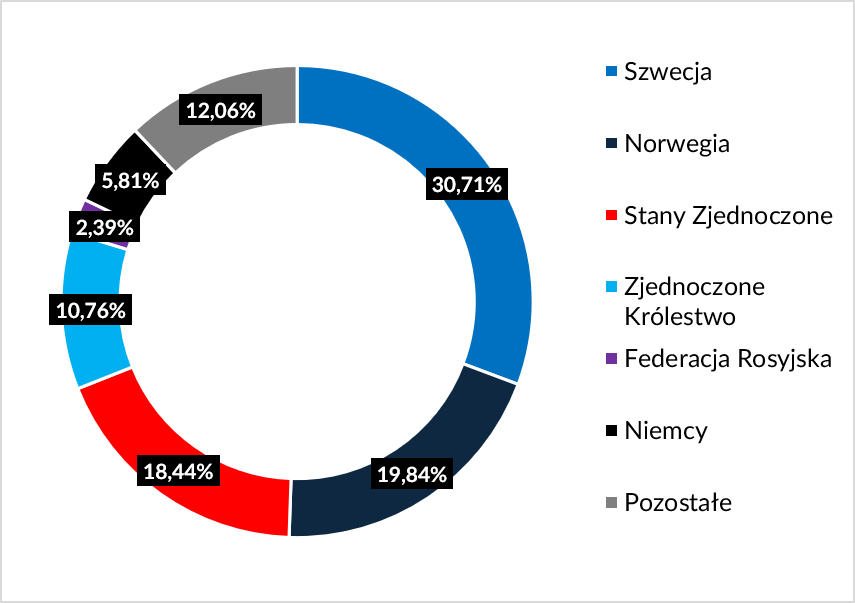
According to customs data, imports of liquefied gas (LPG) in the first half of 2026 fell by about 9% compared with the same period a year earlier. Between January and June 2026, 1.007 million tons of LPG entered Poland, against 1.112 million tons in 2025 - some 9% less. This marks a clear slowdown in the second quarter, because no such effect could be found in the data for the first three months of the year. As usual, most of the gas came from Sweden (30.71%), Norway (19.84%) and the USA (18.44%); the leading suppliers remain unchanged. Since the end of January no LPG fractions may be imported from Russia, so Russia's share (2.39%) results solely from imports carried out in January.
Poland did not import liquefied gas from the Persian Gulf, so the structure of supply remains stable. The same cannot be said of prices. After the American-Israeli attack on Iran, the average price of propane imported into Poland, expressed in zloty, was 50% higher in March and April than it had been in January, but butane reacted to global events even more strongly - in April it was 70% more expensive in imports than at the start of the year. The propane-butane mix, used mainly in the autogas market, behaved similarly: in March and April the average price was 61% higher than in January.
The effective closure of the Strait of Hormuz removed around 30% of global seaborne LPG exports from the market, intensifying competition for limited supplies from the USA. Overnight, the global market was short of 30 million tons of LPG needed to cover annual demand for the product. Worse still, import terminals in Europe were caught off guard - they had no time to build stocks to cover demand, and market trends had pointed to an expected fall in prices. In the short and medium term, the war changed everything. The effect was visible on the retail market in Poland as well: in the second week of April 2026 the highest autogas price in Polish history was recorded at PLN 3.84/l, five groszy above the previous record set in March 2022, immediately after the start of the Russian invasion of Ukraine. Despite this, the government did not decide to include LPG in the CPN support program ("Ceny Paliwa Niżej" - Lower Fuel Prices), as we wrote in our April article.
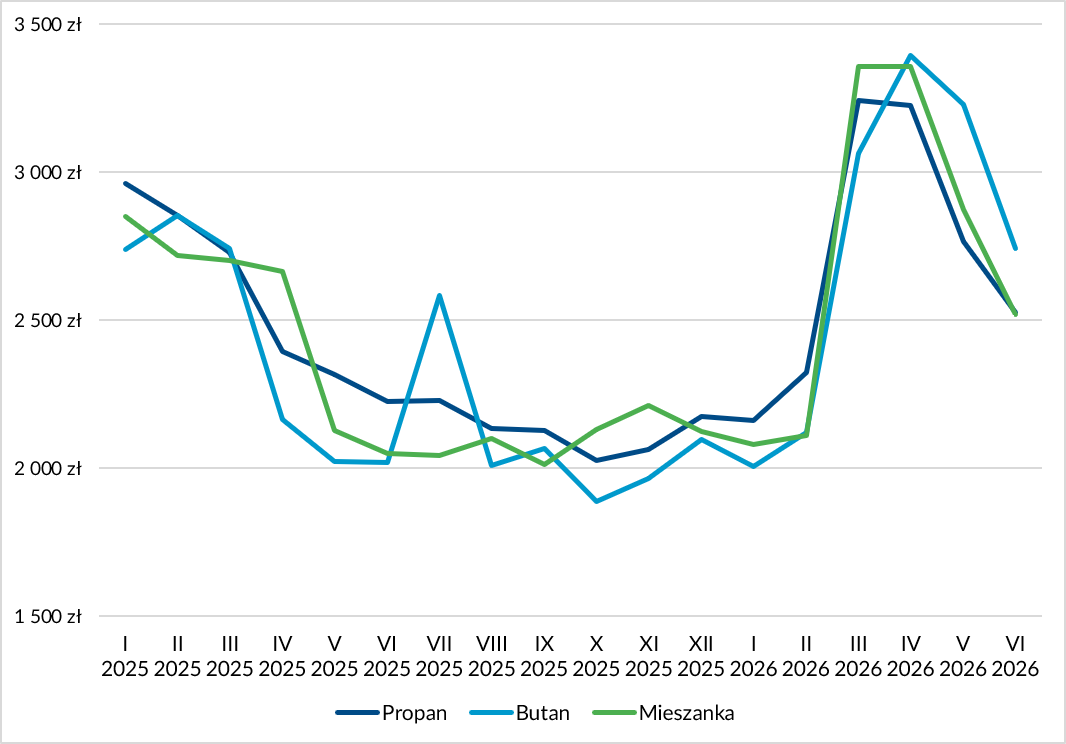
In May and June, after the initial panic, quotations began to fall, which also testifies to the resilience of the LPG market and its ability to adapt to new conditions. The most important developments for the market took place outside Europe: falling demand from the petrochemical industry, the ban on using LPG for anything other than residential purposes in South and South-East Asia, and attacks on shipping and fuel infrastructure in the Persian Gulf.
Waldemar Jaszczyk of Argus Media commented in July for the POGP newsletter:
The closure of the Strait hit global butane supply harder than propane, because cargoes from the Persian Gulf are evenly split between the two products, whereas American deliveries, the main source of alternative supply, are 75% propane.
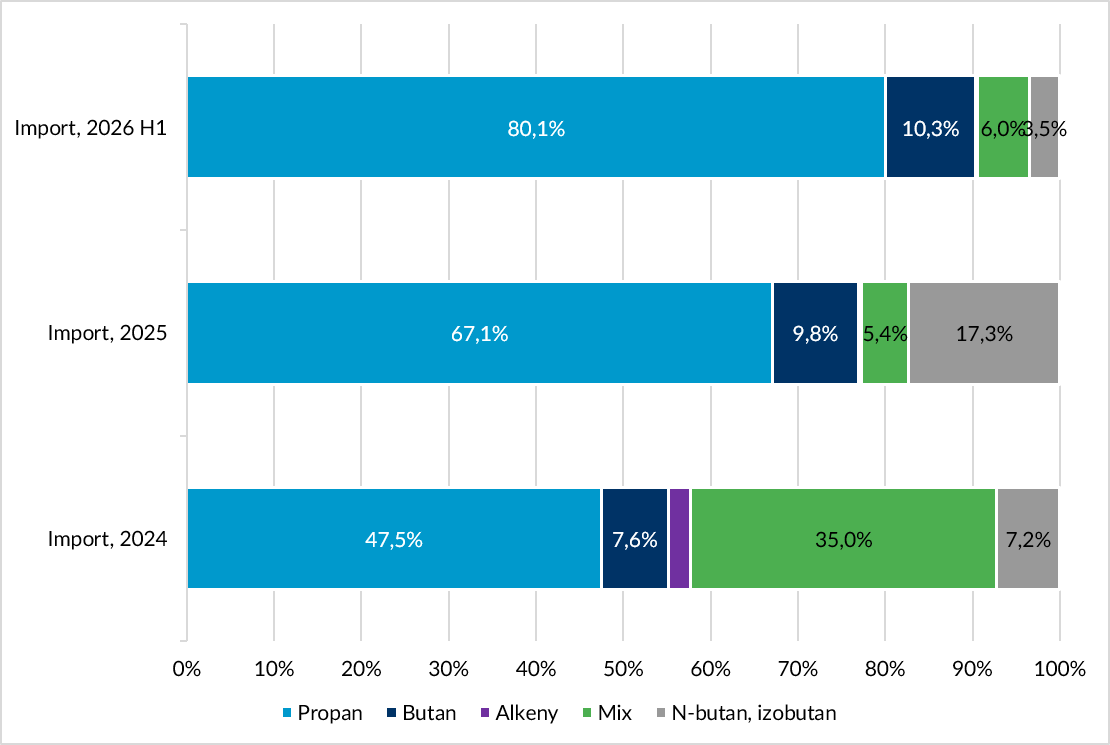
This means that since the second quarter there have been butane supply constraints worldwide, which has affected both prices and physical availability. It is visible in the product mix of imports - propane already accounts for 80% of shipments into Poland, against 67% in 2025 and 48% in 2024, when butane was still arriving in Poland from Russia.
Before Russia's full-scale invasion of Ukraine, the largest share of the product mix of imports belonged to mix, the propane-butane mix used in the autogas market. After the 12th package of European sanctions came into force, imports of the mix collapsed, and pure n-butane, which was excluded from the embargo, began to flow into Poland instead (we wrote about the so-called butane gap in our Report); it was then blended with propane and directed to the fuel market. After the 19th sanctions package removed the option of importing Russian n-butane, its share fell to 3.5%.
Poland is now facing a situation without precedent, in which almost pure propane is being dispensed into cars at filling stations - this complies with the standards and with the Polish quality regulation, but given the different vapor pressures of propane and butane at high summer temperatures, an autogas blend this unusually rich in propane is causing technical problems at some filling stations, particularly where tanks are filled above the recommended levels, as we wrote in July. During hot weather in particular, the most important rule for handling LPG must be observed: avoid filling tanks above 80% of their capacity. As the temperature rises, liquefied gas expands, which in an overfilled tank can cause safety valves to open.
How the second half of the year will look on the domestic LPG market will depend largely on how the geopolitical situation in the Persian Gulf develops and on the prospects for a lasting halt to hostilities in the region.