Q1 2026 on the Polish LPG market
28 May 2026
In terms of the structure of LPG supply to the Polish market, the first quarter of 2026 continued the trends of the previous year. The 19th package of sanctions against Russia entered into force at the end of January, putting a complete end to the legal import of Russian gas into Poland. Import prices illustrate the effects of Iran closing the Strait of Hormuz in the first month of the war.

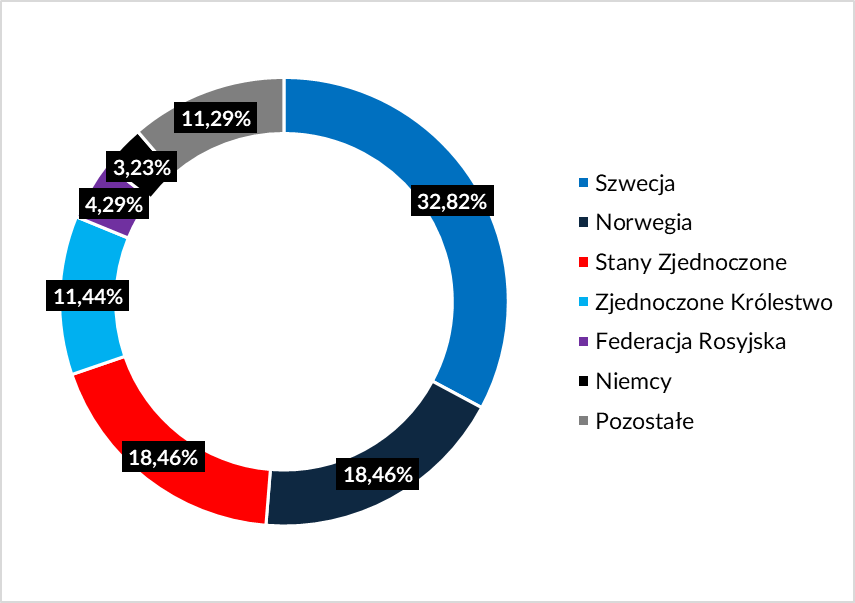
According to customs data, the volume of LPG imports in the first quarter of 2026 did not change significantly compared with the same period a year earlier. Over the three months, more than 560 thousand tons of the fuel reached Poland, a volume very close to that of the first three months of last year. Imports of liquefied gas into Poland are now dominated by four countries of origin, which account for more than 81% of total imports: Sweden, Norway, the United States and the United Kingdom.
Following the entry into force in January of the 19th package of European sanctions imposed in response to Russian actions destabilizing the situation in Ukraine, LPG imports from Russia ceased entirely in January. This closed the so-called n-butane gap, which we wrote about repeatedly throughout 2025. The POGP webinar in January was devoted to the entry into force of sanctions on Russian n-butane with a purity above 95%, and more about the Polish market in 2025 can be found in the article summarizing the conclusions of the POGP Annual Report.
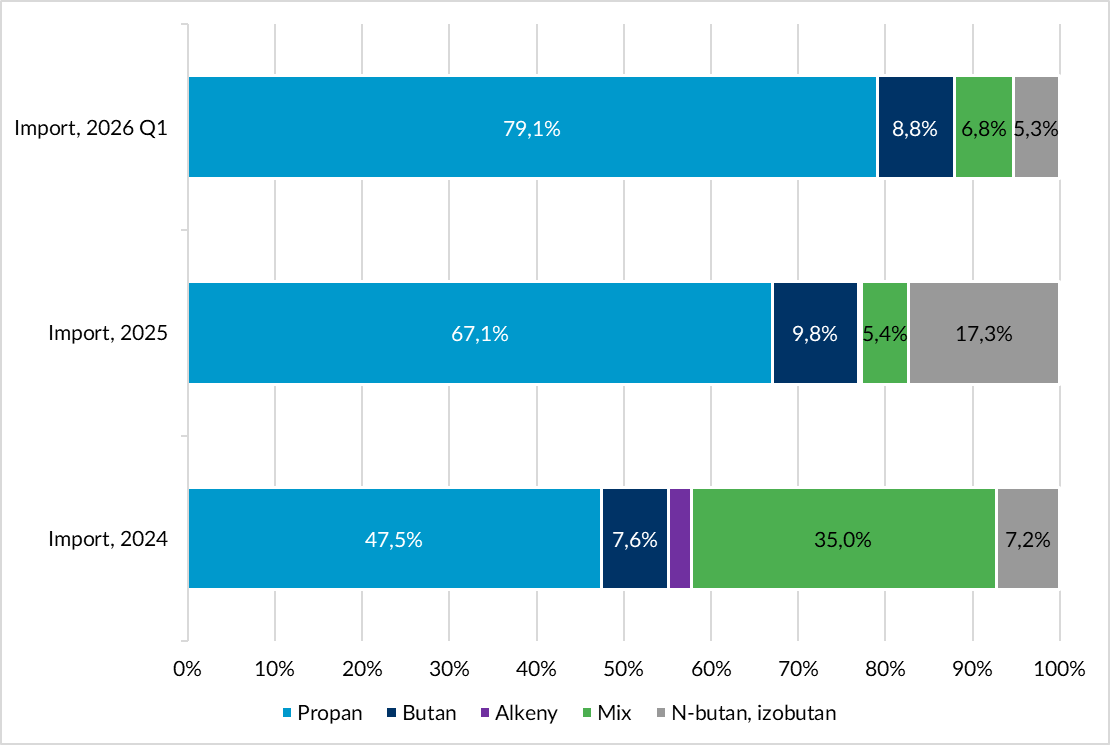
In the context of the entry into force first of the 12th package (in December 2024) and then of the 19th package (January 2026) of sanctions, and of the change in sources of supply, the product mix of liquefied gas imports into Poland has changed considerably. As recently as 2023, the propane-butane mix brought in from the east, used largely in the transport segment, accounted for 40.3% of total LPG imports, and propane for 43.1%. In 2024 the share of the mix fell to 35% and that of propane rose to 47.5%. Last year brought a complete reorientation: the share of propane in the import structure rose to 67.1%, and that of pure butane and isobutane to 17.3%, making it the second most frequently imported LPG fraction. This was an anomaly; never before had this product been imported in such quantities. Since January the situation has turned again: in the first quarter of 2026 the share of propane in total liquefied gas imports into Poland jumped to 79.1%. The availability of butane from non-Russian sources in Europe is limited, and the outbreak of war in the Gulf has made obtaining it harder still.
On 28 February 2026 the United States and Israel attacked Iran. The attack led to a predictable response from Tehran: shelling of port infrastructure in the Persian Gulf region and the closure of the Strait of Hormuz to maritime traffic, through which about 20% of global crude oil exports and about 27% of global LPG exports pass. The largest LPG exporters in the region are the United Arab Emirates (26%), Qatar (23%), Iran (20%) and Saudi Arabia (15%). In March, shipowners suspended gas carrier traffic through the Strait of Hormuz for fear of Iranian attacks. This caused a global fall in LPG supply of about 5 million tons per month and the demand destruction already being observed, particularly in the petrochemical sector and, to a lesser extent, in the power sector.
Although Poland does not directly import significant volumes of LPG from the Persian Gulf region, the closure of the Strait of Hormuz is driving up prices on world markets, which indirectly affects the Polish consumer. Poland is not at risk of supply shortages, although the availability of propane-butane mixes on the global market is limited, which significantly affects prices. Butane prices responded more sharply to the crisis, because the response to the rise in the price of propane was a fall in demand from the PDH industry. Europe is today supplied predominantly by producers from the United States, who will now also be approached by buyers that have temporarily lost their sources of supply in the Persian Gulf.
Experts point out that even if the physical commodity reaches Poland from the United States or Norway, its price is set by a global equilibrium point which, once Middle Eastern supplies are cut off, shifts abruptly. An additional risk factor is the absence of strategic LPG reserves in countries such as India and China, which forces buyers there into sudden purchases on the spot market, pushing up the prices paid by Polish importers as well. It is worth remembering that even once Hormuz reopens, prices will not return to normal immediately: the strait will have to be cleared of mines, the export infrastructure of the Gulf states restored to working order, and then it will take time for the exported hydrocarbons to reach filling stations. This may take several months. We discussed the possible scenarios for the LPG market on 23 April during the 3rd edition of the Gaseous Fuels Forum conference in Warsaw.
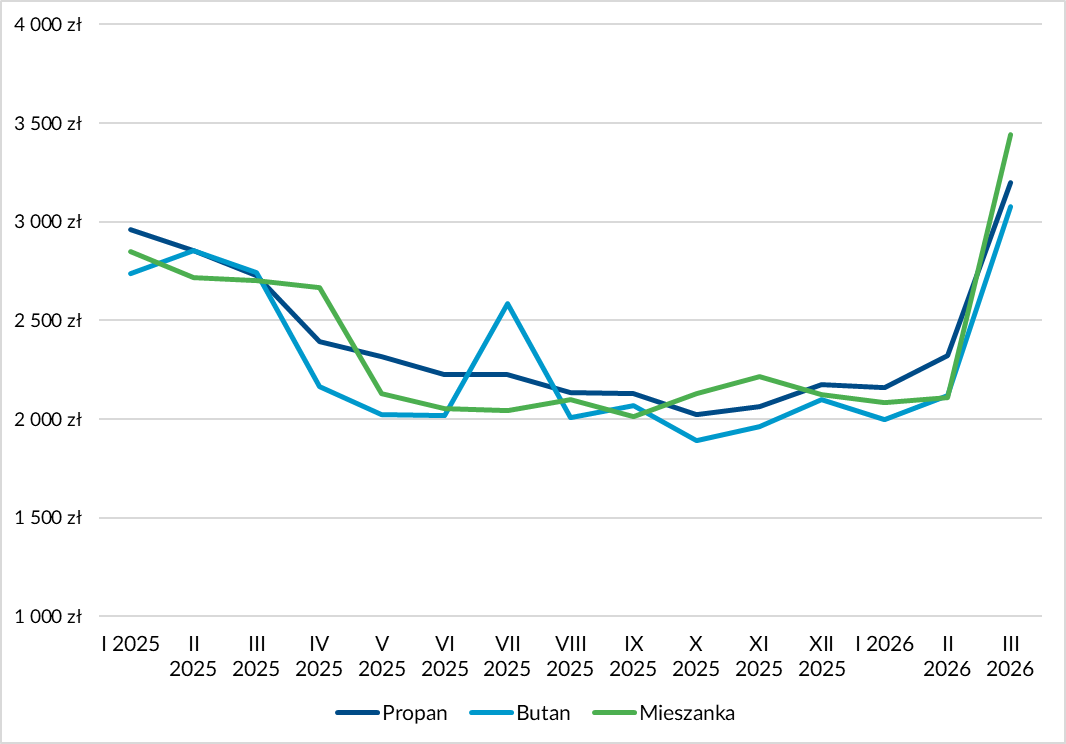
The war with Iran led to a drastic rise in the prices of liquefied gas imported into Poland. According to Ministry of Finance data, declared import prices into Poland rose on average between January and March 2026 by 48% for propane, by 65% for butane and by 54% for the mix. The increase in wholesale prices fed through to retail prices, above all for drivers, since the autogas market relies essentially on the propane-butane mix. Despite the rise in retail prices, the government did not decide to include autogas users in the CPN program, under which excise duty and VAT rates were lowered for gasoline and diesel.