54.5% of Poles Use LPG
20 November 2023
In September, the SW Research agency carried out a public opinion survey on the perception of LPG, commissioned by the Polish Liquefied Gas Organization. The study was conducted as an online poll among a group of 1,077 respondents. What are the key findings?

How do Poles use LPG?
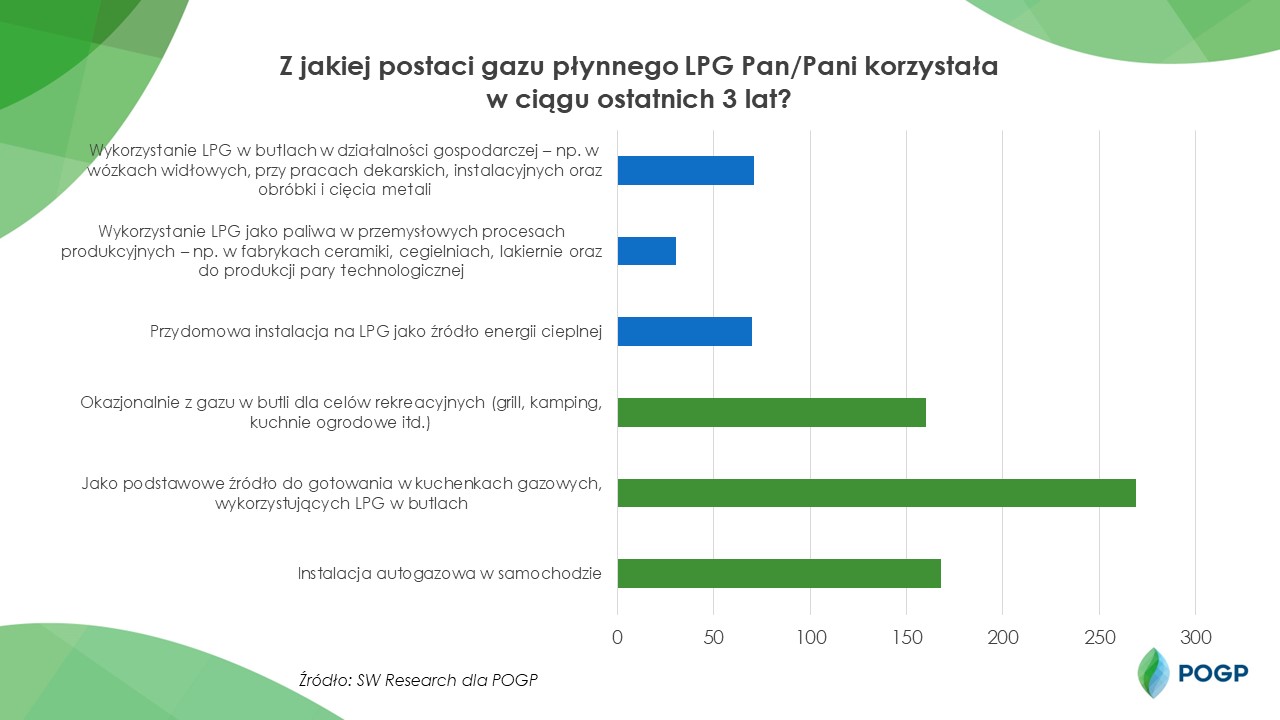
The survey results suggest that only 490 out of 1,077 respondents (45.5%) had no contact with LPG as an energy source over the past three years. The largest group of respondents, comprising 269 people, used LPG for cooking meals. This points to the widespread use of LPG as a cooking fuel. 168 of the 1,077 people surveyed (15.6%) used autogas to power their vehicles - which roughly corresponds to the share of passenger cars with LPG conversion systems in Poland's entire vehicle fleet. Based on data from Statistics Poland (GUS), 3.4 million out of the 25.8 million vehicles registered in the country (13.3%) are fitted with such a system. LPG, Poland's most popular alternative fuel, is holding its ground firmly. It is worth recalling that Poland is the largest autogas market in Europe, and that over the past two decades Polish manufacturers of LPG conversion systems have built unique competencies from scratch and are today enjoying great success on world markets.
160 survey participants mentioned using LPG for recreational purposes - in outdoor kitchens, gas grills, campervans and so on. 70 respondents (6.5%) used domestic tanks as a source of heat for their homes. This is one of the industry's most important markets as the old, non-classified coal stoves that still dominate rural areas are replaced with efficient condensing boilers. A similar number of respondents - the vast majority of them men - used LPG at work: in forklift trucks, in roofing work and for metalworking and cutting.
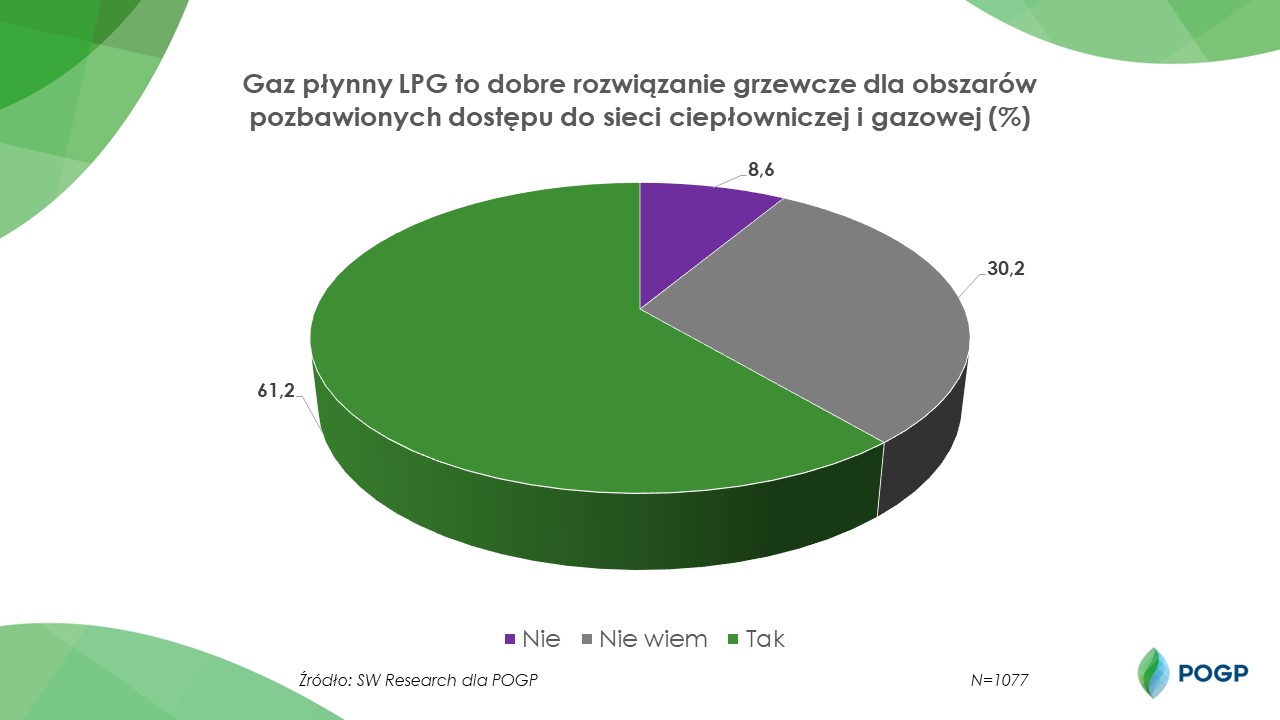
LPG is a fuel that is particularly common in sparsely urbanized areas. The share of respondents living in towns of more than 20 thousand inhabitants who declare that they have no contact with liquefied gas ranges between 53-56%. In localities below 20 thousand inhabitants the opposite is true - 62% of respondents use LPG. Liquefied gas is a subject to be discussed with the residents of rural areas - they know the most about it, because they use it every day. They also have the best opinion of LPG. 61% of our respondents considered LPG to be a good solution as an energy carrier in rural areas - in small localities this share reached 65%.
Factors behind the choice of LPG and its advantages
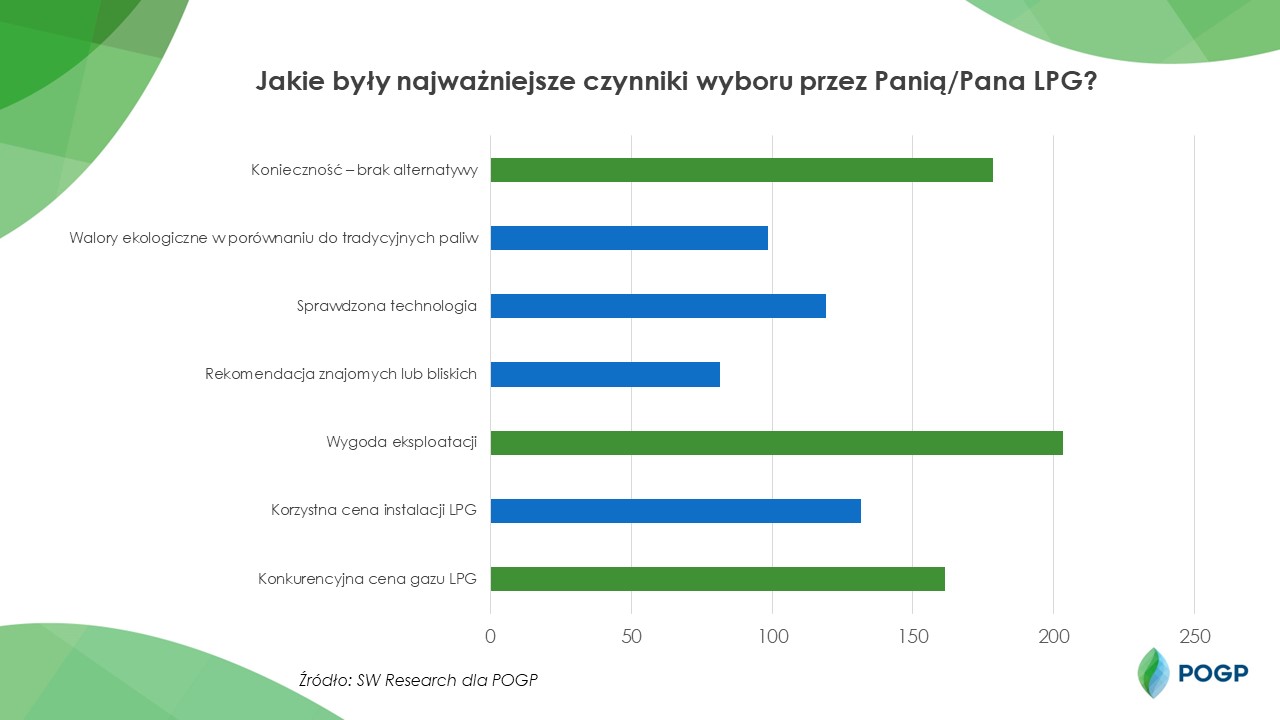
We asked our respondents about the key factors behind the choice of LPG. One of the key factors that emerged from the survey is the convenience of using liquefied gas. In total, 203 users highlighted the ease of operating and maintaining a gas installation as an important reason for choosing LPG as their fuel source. This applies both to vehicle users and to heating systems or cooking. Using gas is simple, and the systems are trouble-free.
An important factor whose position on the list came as something of a surprise is the necessity of choosing LPG in the absence of alternative options - it was indicated by as many as 179 respondents. This means that for some consumers LPG is the only realistic choice because alternative fuels are unavailable or available only to a limited extent. This usually results from living beyond the reach of infrastructure - district heating or natural gas networks - or from the lack of affordable options that users would treat as an alternative. This option was chosen more often by women than by men (33.5% versus 27%).
The competitive price of the fuel proved to be another significant factor influencing consumers' choice of LPG, with 162 people naming it as the main motive behind their decision. LPG has long been appreciated for its cost-effectiveness compared with traditional fossil fuels, yet price motivation was ranked only third by our respondents.
Ease of operation, necessity in the absence of alternatives and the competitive prices of LPG are the key factors taken into account by consumers. Among the other answers are also the fact that this is a proven technology and its environmental qualities - the latter are indicated more often by men than by women (20% versus 14%).
We also asked respondents which qualities of LPG they consider the most important. While the question about the factors behind choosing liquefied gas was addressed only to users who had used this fuel in the past three years, the question about its advantages was put to everyone, which allows us to compare the answers to both questions.
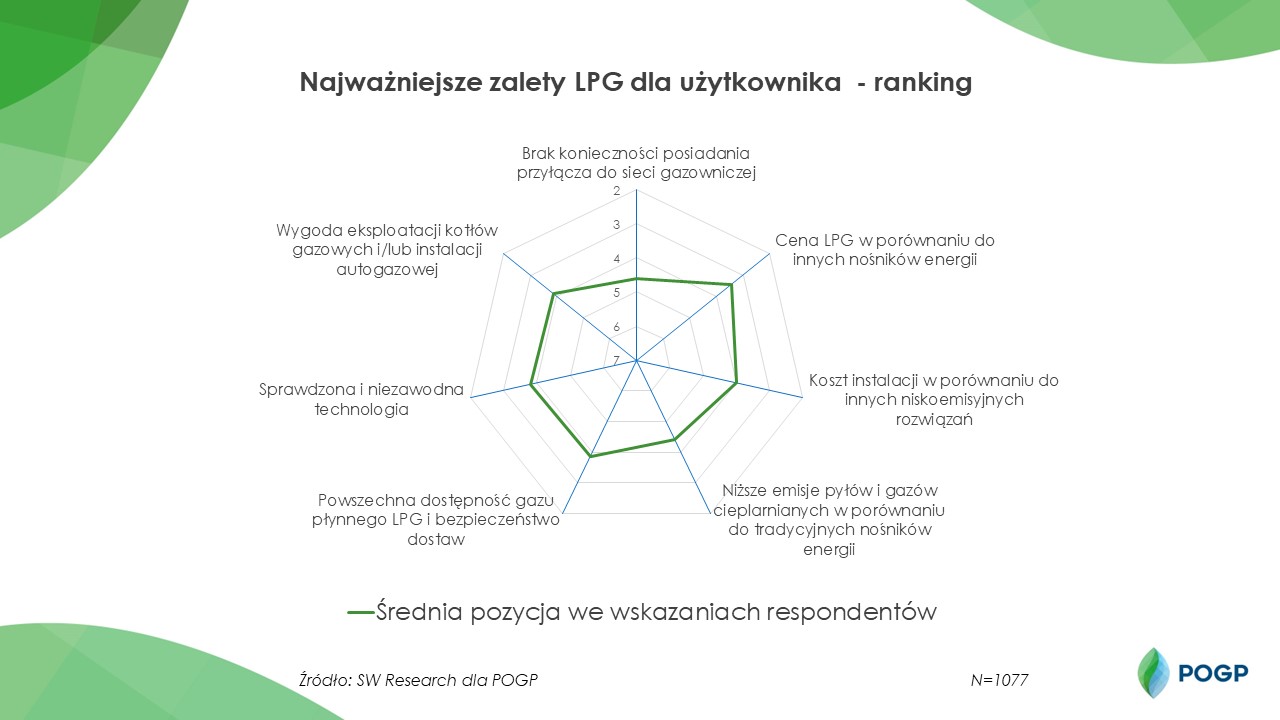
Respondents were asked to rank (from 1 to 7) the advantages for the user that they consider the most important. In this case the low price of LPG compared with other energy sources is overwhelmingly regarded by users as the most important factor. As many as 32% of respondents named this factor as the most important. This shows that an affordable price is identified as an advantage of LPG by the largest group of Poles, even though it is not necessarily the most important factor in everyone's choice of liquefied gas!
A solid second place in the ranking of the most significant qualities of liquefied gas highlighted by respondents went to the perception of LPG as a proven and reliable technology, available on the market for decades: 17% of respondents put this advantage in first place, and 18% - in second. This testifies to the trust Poles place in LPG as a dependable energy option.
Two other features were given almost equal weight by respondents - the widespread availability of LPG and the convenience of operating gas installations were considered equally important advantages. The availability of LPG in a variety of locations gives users easy access to the fuel, while the convenience of operating gas installations - named by users as the most important factor in choosing this technology over another - offers a user-friendly experience.
Air quality matters
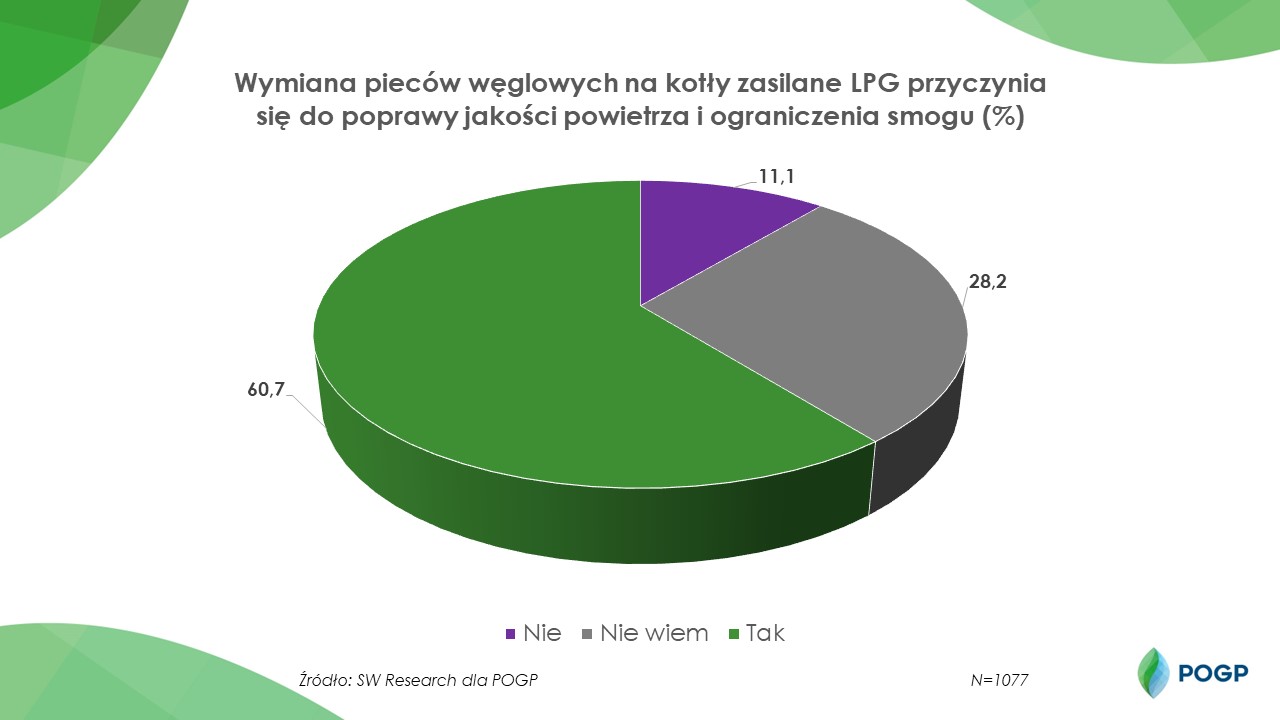
17% of respondents regarded environmental qualities as the most important factor in their own choice of an LPG installation. So although Poles rank emissions lower than those of other energy carriers as only the fifth or sixth most significant advantage of liquefied gas, they do appreciate its importance for improving air quality. As many as 61% answer yes to the question of whether replacing coal stoves with gas condensing boilers will help reduce smog.
This confirms the positive perception of LPG as an alternative energy source among the Polish population. Switching to LPG for heating has a number of advantages
- First, liquefied gas is a cleaner fuel than coal, emitting fewer pollutants and reducing the overall carbon footprint. This translates into a significant improvement in air quality, especially in areas with a high concentration of coal-based heating systems. By limiting the release of harmful substances into the atmosphere, LPG boilers help to mitigate smog, which is a serious environmental problem in many Polish suburban areas.
- Using LPG boilers also offers practical benefits. LPG is readily available and easy to store, which makes it a convenient option for households and businesses. This not only reduces energy spending for consumers but also curbs domestic demand for coal, leading to a more sustainable energy landscape. The positive perception of LPG as a genuine alternative to coal is further supported by other studies and statistics. Research conducted by expert centers has shown that using LPG as a heating fuel can reduce emissions of sulfur dioxide, nitrogen oxides and particulate matter, all of which are harmful to human health and the environment.
The survey results reflect a growing consensus in Polish society about the benefits of using LPG as an alternative to coal. This shift in perception is crucial for meeting the environmental and health challenges associated with burning fossil fuels. It is encouraging that most respondents see the positive impact on air quality and are willing to use this cleaner and more sustainable energy source.
We recall the conclusions of the webinar organized by the Polish Liquefied Gas Organization (POGP) in cooperation with the Kraków University of Economics, devoted to the issue of heating buildings:
Replacing old coal boilers with gas heating or heat pumps would in practice eliminate low-stack emissions (particulate matter and benzopyrene). It would also mean a reduction in CO2 emissions in the building sector – by around 61-65% in the case of gas heating, and by more than 50% in the case of compressor heat pumps. These figures take into account the indirect emissions that arise from generating electricity under the conditions of the Polish energy mix.
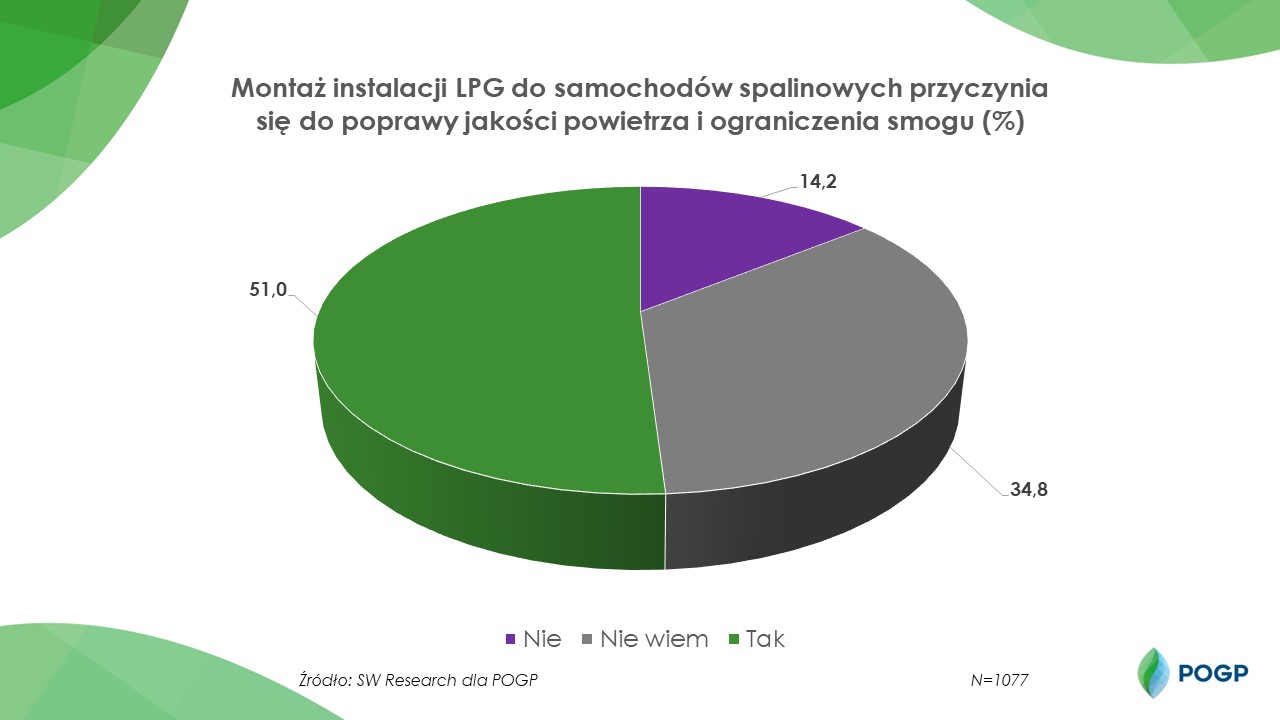
51% of respondents also judge that fitting LPG conversion systems to internal combustion cars contributes to improving air quality and reducing smog. This result underlines the positive perception of LPG as a response to environmental issues. Using LPG as an alternative fuel can significantly reduce emissions of harmful pollutants such as nitrogen oxides and particulate matter. According to POGP estimates, using LPG in place of traditional fuels in 3 million cars in Poland cuts annual CO2 emissions by about 1 million tons. Moreover, liquefied gas is a cost-effective option compared with gasoline or diesel, which makes it an attractive choice for car owners.
The same share of respondents - 51% - considers that autogas makes it possible to travel comfortably around Europe. This conclusion rests on the wide availability of liquefied gas at filling stations, which was reflected in the recent debate on the European regulation on alternative fuels infrastructure (AFIR); the European Commission concluded that LPG infrastructure is sufficiently widespread, compared with dispensers for fuels such as LNG and CNG or chargers for electric cars, that it does not require additional support.
What heating for the home?
The positive perception of LPG as a heating medium persists despite the industry's relatively low spending on communication. Asked whose heating technology advertising reaches Poles most often, respondents have no doubts - they are flooded with advertisements for heat pumps. It is no surprise that spending on the promotion of heat pumps far exceeds outlays on the promotion of other heating technologies. This is evidence of the very expansive marketing strategy pursued by heat pump distributors over the past two years. By investing in heat pump advertising, companies seek to increase their market share and encourage the spread of this technology among the Polish population. In the analysis by Stowarzyszenie Producentów i Importerów Urządzeń Grzewczych (the Association of Heating Appliance Manufacturers and Importers) for the first three quarters of 2023 we read:
Last year we saw record growth in sales of these devices, the result of very intensive promotion of this technology by EU experts and politicians, combined with a broad PR campaign in favor of
moving away from gas. Actions of this kind caused a large increase in interest in heat pump technology, including among users whose homes are not adapted to this form of heating, which began to lead to ever more frequent negative opinions about heat pumps - the result not of the technology being bad, but rather of unprofessional installation and selection of these devices. (...)
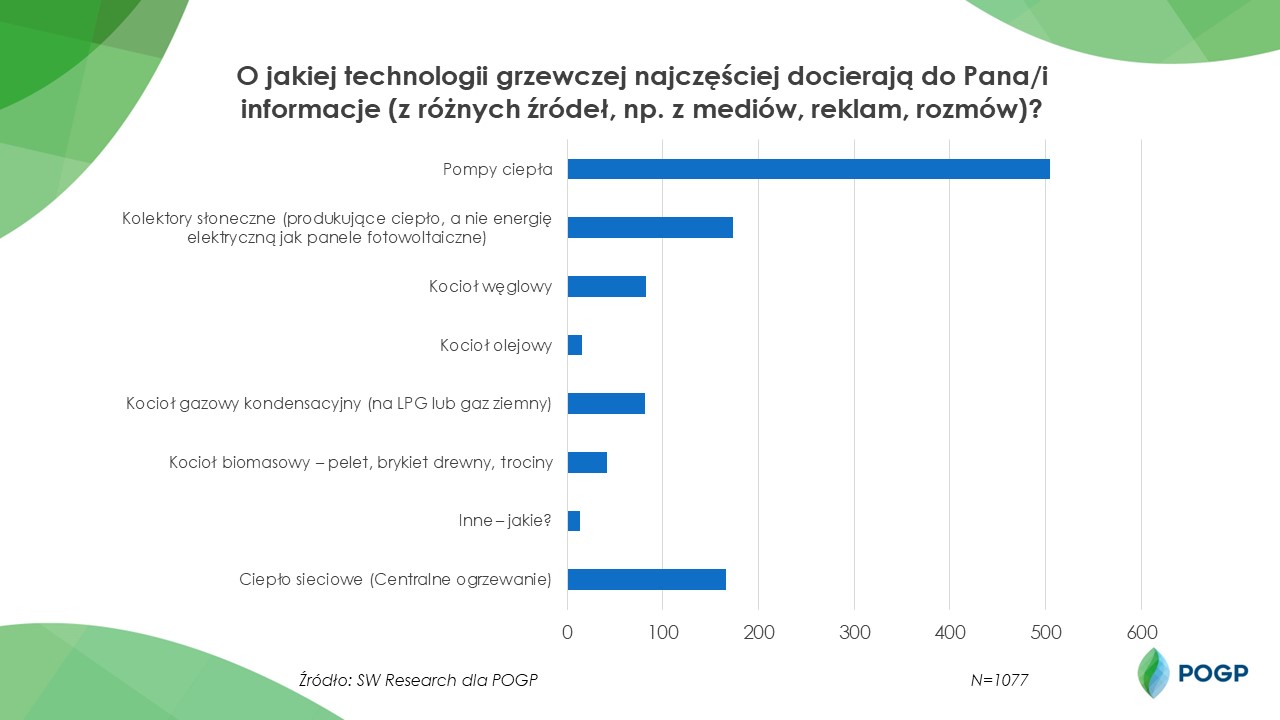
Solar technologies also occupy a significant position in the advertising landscape. It should be noted, however, that respondents often confuse photovoltaics with solar collectors, since - in SPIUG's assessment - consumers still know little about collector technology.
The POGP survey highlights the overwhelming presence of heat pumps in promotional activity and underlines the importance of educating the public in the process of transforming heating systems. Companies and decision-makers should take informed decisions in order to further promote sustainable heating solutions and contribute to the country's overall energy transition - rather than relying solely on the scale of the marketing carried out by the suppliers of individual technologies.
Nevertheless, heat pump advertising does influence consumers' purchasing preferences. Asked which heat source they would choose for a new house connected neither to a district heating network nor to the gas grid, respondents point first to a heat pump, second to solar collectors - probably often confused with photovoltaic installations - and third to hybrid systems (for example a gas boiler and a heat pump). Only after them come condensing boilers fueled with LPG. Coal boilers close the field of preferred technologies.
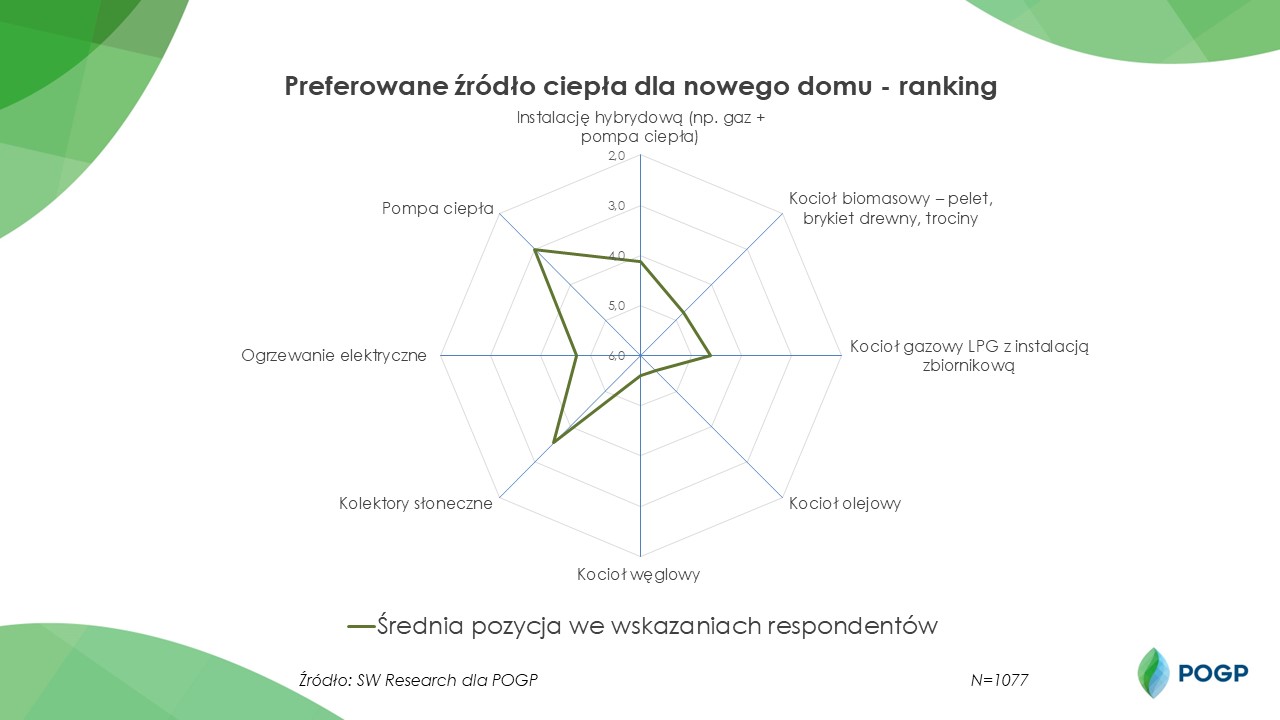
It is worth emphasizing that the question asked concerned only new houses, for which a heat pump or a hybrid system will often be an advantageous solution. In the case of existing buildings, especially those with poorer energy efficiency parameters, gas heating remains an attractive proposition from an economic point of view. According to SPIUG's estimates:
What we do see is renewed and growing interest in gas, whose absence no one fears any more, while media reports about electricity prices in 2024 are cooling investors' appetite for buying heat pumps.