What the EPBD Says About Boilers
28 December 2023
On 7 December 2023 the very heated negotiations between the Commission, the Council and the European Parliament on the content of the new Energy Performance of Buildings Directive (EPBD) came to an end. For a year some media had been predicting that it meant the end of gas heating. What has actually made it into the text, which the European Parliament is still formally to adopt in February 2024?

The EPBD Directive aims to reduce greenhouse gas emissions and energy consumption by buildings across the EU. The Directive’s overriding objective is uncontroversial and is intended to improve the quality of life of citizens and to lower energy bills, while also improving Europe’s energy independence and the business case for modernizing buildings. As usual, everything comes down to the instruments by which these objectives are to be achieved. These are in particular:
- National building renovation plans, which at national level are to trigger a renovation wave and lead to the modernization of the oldest buildings (16% by 2030 and 26% by 2033) and to a reduction in total energy consumption in the building sector (by 16% by 2030 and by 20-22% by 2035).
- The wider deployment of cycling infrastructure and of charging points for electric vehicles in buildings.
- Setting standards for zero-emission buildings (ZEBs), which all newly constructed buildings must meet after 2030, and which are ultimately to cover the entire building stock in the European Union.
- An obligation to install solar energy installations in buildings, where this is technically and economically feasible. For new residential buildings this obligation would enter into force on 31 December 2029.
We wrote about an earlier stage of the work on the EPBD Directive in the spring.
What does the new EPBD Directive say about gas boilers?
By setting requirements for ZEBs, the EPBD Directive also defines which heat sources will be allowed to be installed in newly constructed and modernized buildings. Since a great deal of imprecise information on the matter is circulating in the public debate, it is worth taking a closer look at the wording of the negotiated provisions.
- Recital 14: Member States should strive to phase out standalone boilers powered by fossil fuels, and as a first step, from 2025 financial incentives for replacing heat sources with standalone boilers powered by fossil fuels should be withdrawn. It will still be permitted to offer financial incentives for hybrid systems with a significant share of renewable energy sources (RES), such as a combination of a boiler with a solar collector or with a heat pump.
- Recital 20: for the purposes of covering the energy demand of zero-emission buildings, energy from the on-site combustion of renewable fuels is treated as energy from renewable sources generated locally.
- Article 2(2): a "zero-emission building" means a building with a very high energy performance, requiring zero or a very low amount of energy, producing zero on-site carbon dioxide emissions from fossil fuels and producing very low greenhouse gas emissions in operation, in accordance with Article 9b.
- Article 7(1): all newly constructed buildings must have zero-emission (ZEB) status from 1 January 2030.
- Article 9b(6): Member States will ensure that the annual energy demand of ZEBs is covered by:
▶ renewable energy produced on site or nearby,
▶ renewable energy produced by an energy community,
▶ energy from an efficient district heating system in accordance with the Energy Efficiency Directive (EED),
▶ energy from "carbon-free" sources.
- Article 11(5) and (6): Member States should strive to replace standalone boilers powered by fossil fuels in existing buildings in line with the national plans they have adopted for phasing out boilers powered by fossil fuels. The European Commission will issue guidance on what should be understood as a boiler powered by fossil fuels.
- Article 15: from 2025 Member States should not offer any financial incentives for the installation of standalone boilers powered by fossil fuels.
- Annex II (the template for national building renovation plans) contains an overview of the legislative measures taken by a given country, including with regard to the decarbonization of heating with the intention of phasing out boilers powered by fossil fuels by 2040.
Conclusions
The process of negotiating the EPBD Directive at the level of the Council of the European Union, that is between the Member States, was long and difficult. The European Parliament adopted its position in March 2023, and the Council adopted its general approach to the draft directive - significantly different from the compromise finally worked out - as early as October 2022. Because of the consequences for consumers, the legislative process gave rise to a great deal of controversy on the part of countries whose climate conditions, energy mix and building stock differ significantly from one another.
As regards the scope for using gas boilers after 2030, the agreed compromise on the EPBD Directive can be read as follows:
- In zero-emission buildings (new ones and those modernized after 2030) it will not be possible to use standalone - i.e. not combined with other heat sources - boilers powered exclusively by fossil fuels, including coal, natural gas and LPG of fossil origin. Hybrid systems consisting of a boiler and other renewable sources will be able to be installed.
- From 2025 Member States must withdraw financial support for replacing heat sources with new sources using fossil fuels only. This means, for example, changes to the "Clean Air" program, which from then on could finance gas boilers only if they operate in combination with renewable energy sources.
- In zero-emission buildings it will be possible to install boilers powered by renewable fuels, such as biomethane or biopropane, because they will be treated as renewable energy sources installed locally.
- Because of the very imprecise wording contained in the text of the Directive (fossil fuel boiler, carbon-free sources), which has no definition in European law - a deliberate move on the part of the Council, which made it possible to conclude the negotiations in 2023 - the Commission will issue guidance on how it is to be understood, and the Member States may interpret it flexibly at the stage of transposition into national law. This means that in the Polish act on the energy performance of buildings, which will have to be adapted to the new directive, wording such as "carbon-free sources" will be able to be defined under national law.
In practice, the negotiations ended by shifting responsibility for interpreting the most controversial provisions onto legislators in the Member States, including in Poland.
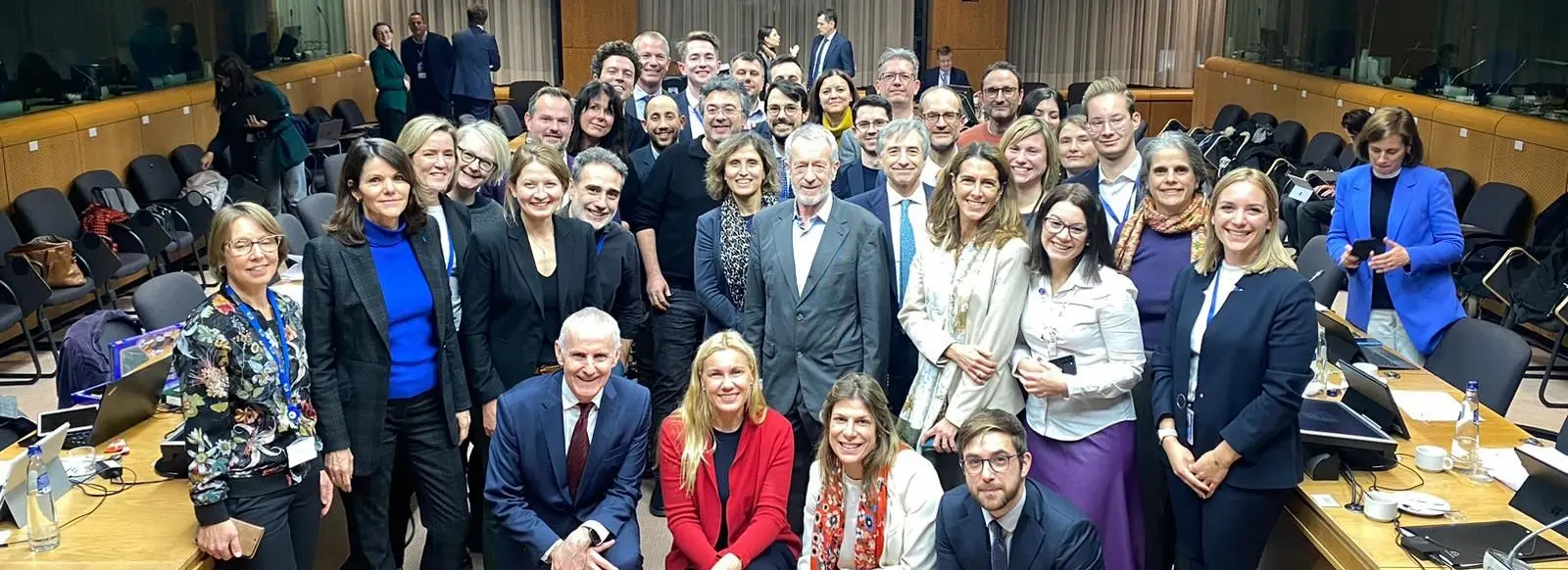
Photo: Ciarán Cuffe, the European Parliament’s rapporteur for the EPBD Directive