Liquefied Gas a Solution for a Safe Winter
26 July 2022
In the context of the European Commission Communication of 20 July this year entitled Save gas for a safe winter, the Polish Liquefied Gas Organization notes that liquefied gas (LPG) remains an attractive and available source of heat for buildings outside metropolitan areas.

In its communication COM (2022) 360, the European Commission calls on the Member States to reduce natural gas consumption by 15% in the period from 1 August 2022 to 31 March 2023. One of the recommended measures is replacing Russian natural gas with other energy carriers. Liquefied gas (LPG) can be such a carrier: its largest global producer is the United States, and it is increasingly imported into Poland through three sea terminals.
How does liquefied gas differ from natural gas?
- Unlike natural gas, which until now has mostly been delivered to Poland through the Yamal pipeline, liquefied gas (LPG) – propane or a propane-butane mix – reaches Poland by road or rail tanker, or by sea. As a result, sources of supply are easy to change and it is impossible to cut off supply to the market by what is known as turning off the tap.
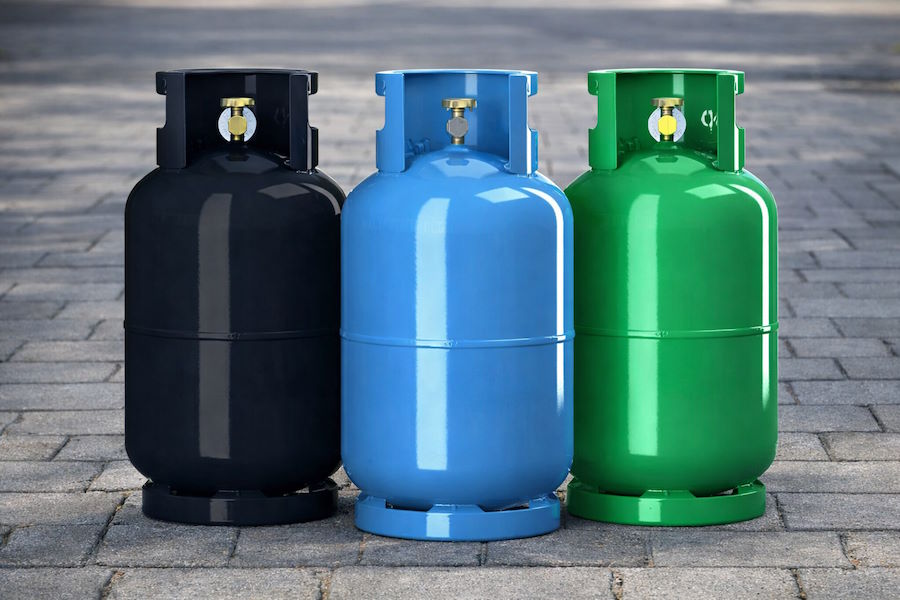
- At room temperature and under low pressure, liquefied gas (LPG) is a liquid, which means that large quantities of gas can easily be stored and transported in cylinders and tankers. This solution also makes it possible to plan deliveries independently and to fill storage – for example a domestic tank – in advance, for the whole winter.
- Liquefied gas can be delivered everywhere that natural gas from the network does not reach, which is why it can be used as a bridging fuel – until a gas connection is built. More than 2.5 million single-family buildings in Poland that still have no access to natural gas can successfully use liquefied gas (LPG).
- Liquefied gas (LPG) is a solution dedicated to private individuals and to small and medium-sized businesses, for cooking meals, heating homes and premises not connected to the gas network, animal breeding and rearing, heating greenhouse crops and drying plants. According to Statistics Poland (GUS), 34% of households in Poland use LPG for heating purposes – above all in rural areas.
LPG answers the needs of those consumers who are guided by the good of the natural environment while at the same time consciously analyzing investment costs. In June this year Uniwersytet Ekonomiczny w Krakowie (the Kraków University of Economics) published a report entitled Koszty ogrzewania domów jednorodzinnych według źródeł ciepła – ekonomiczne i środowiskowe korzyści termomodernizacji (Heating costs of single-family houses by heat source – the Economic and Environmental Benefits of Thermal Retrofitting)1. It calls for the mass thermal retrofitting of buildings, which should be accompanied by a switch to gas or to a heat pump. The key conclusions indicate that:
- Replacing coal-fired stoves with gas boilers helps to cut emissions of harmful particulates and of hazardous benzopyrene by close to 100% and reduces CO2 emissions by 65% for a single household;
- The cost of heating residential buildings is determined above all by how well the building is insulated, while from the point of view of reducing low-stack emissions the source of home heating is decisive.
- At the energy carrier prices in force at the beginning of 2022, the optimal heating technologies for single-family buildings are heat pumps and heating systems using natural or liquefied gas.
In connection with the rumors of an alleged ban on the use of gas boilers at European Union level, which have worried users of gas heating technologies in recent weeks, the Polish Liquefied Gas Organization approached the Ministry of Development and Technology with a request for an interpretation of the legislative work being conducted at the level of the European Commission. According to the response received, “at present, concerns about a possible ban on the operation of gas boilers in existing buildings appear unfounded.”
The European Union has no power to ban any heating technology. The proposed provisions seek instead to limit the use of fossil fuels for heating purposes, which means that in the future LPG users will increasingly rely on fuels of renewable origin (bioLPG).
The Polish Liquefied Gas Organization (POGP) is an employers' organization bringing together production and trading companies engaged in the purchase, bottling and distribution of liquefied LPG and LNG, as well as in the manufacture of and trade in equipment used for its transport, storage and use.
1 Koszty ogrzewania domów jednorodzinnych według źródeł ciepła – ekonomiczne i środowiskowe korzyści termomodernizacji, Uniwersytet Ekonomiczny w Krakowie, June 2022