Presentation of the POGP Annual Report for 2021
25 April 2022
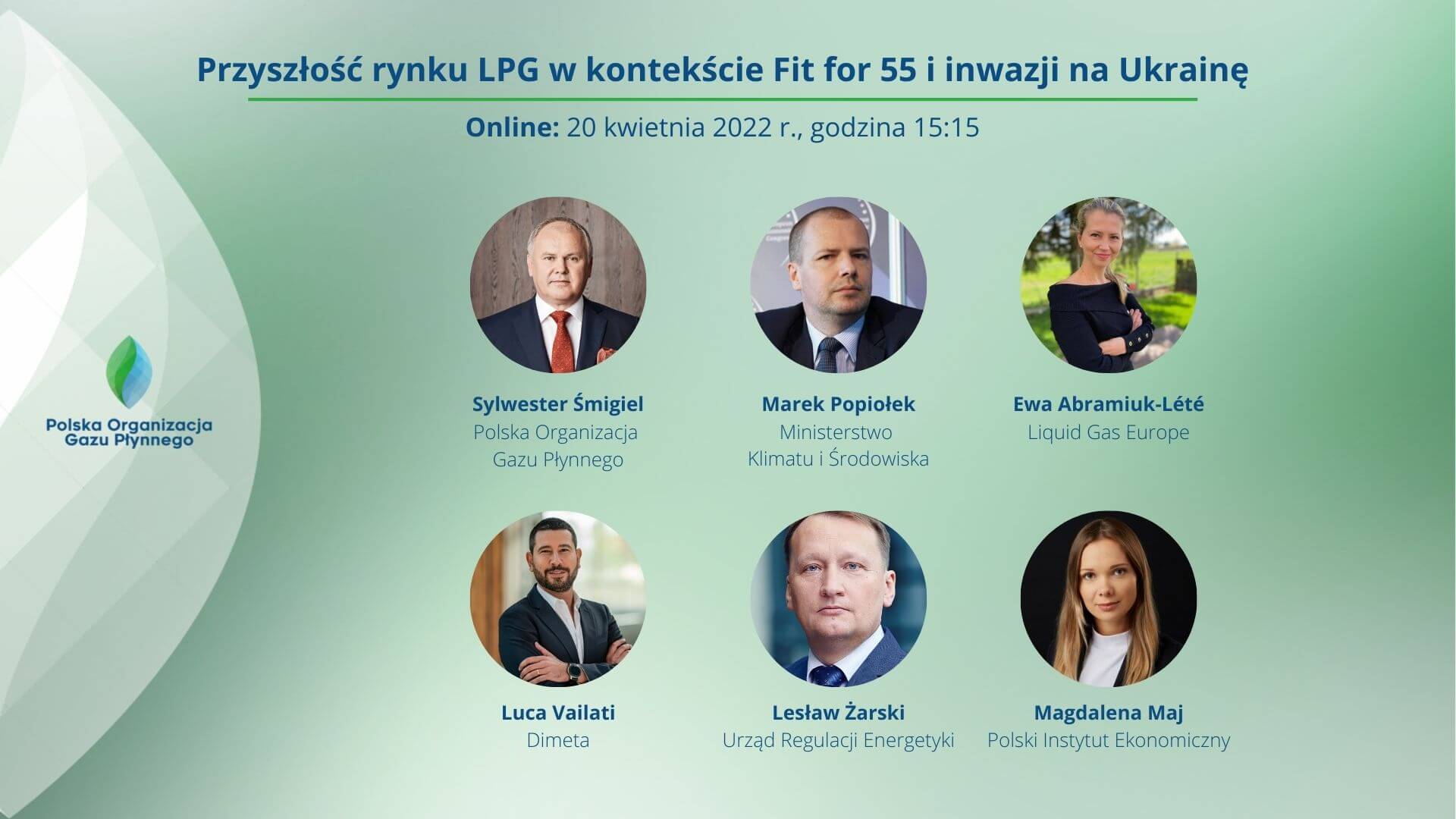
On 20 April 2022 the Polish Liquefied Gas Organization held a webinar entitled Przyszłość rynku LPG w kontekście Fit for 55 i konsekwencji inwazji na Ukrainę (The Future of the LPG Market in the Context of Fit for 55 and the Consequences of the Invasion of Ukraine), accompanying the presentation of the latest POGP Annual Report for 2021. The anniversary report, summarizing 25 years of POGP, presents a picture of the Polish LPG market on the threshold of dynamic legal changes linked to the ambitious targets of European climate policy and to the Russian invasion of Ukraine.
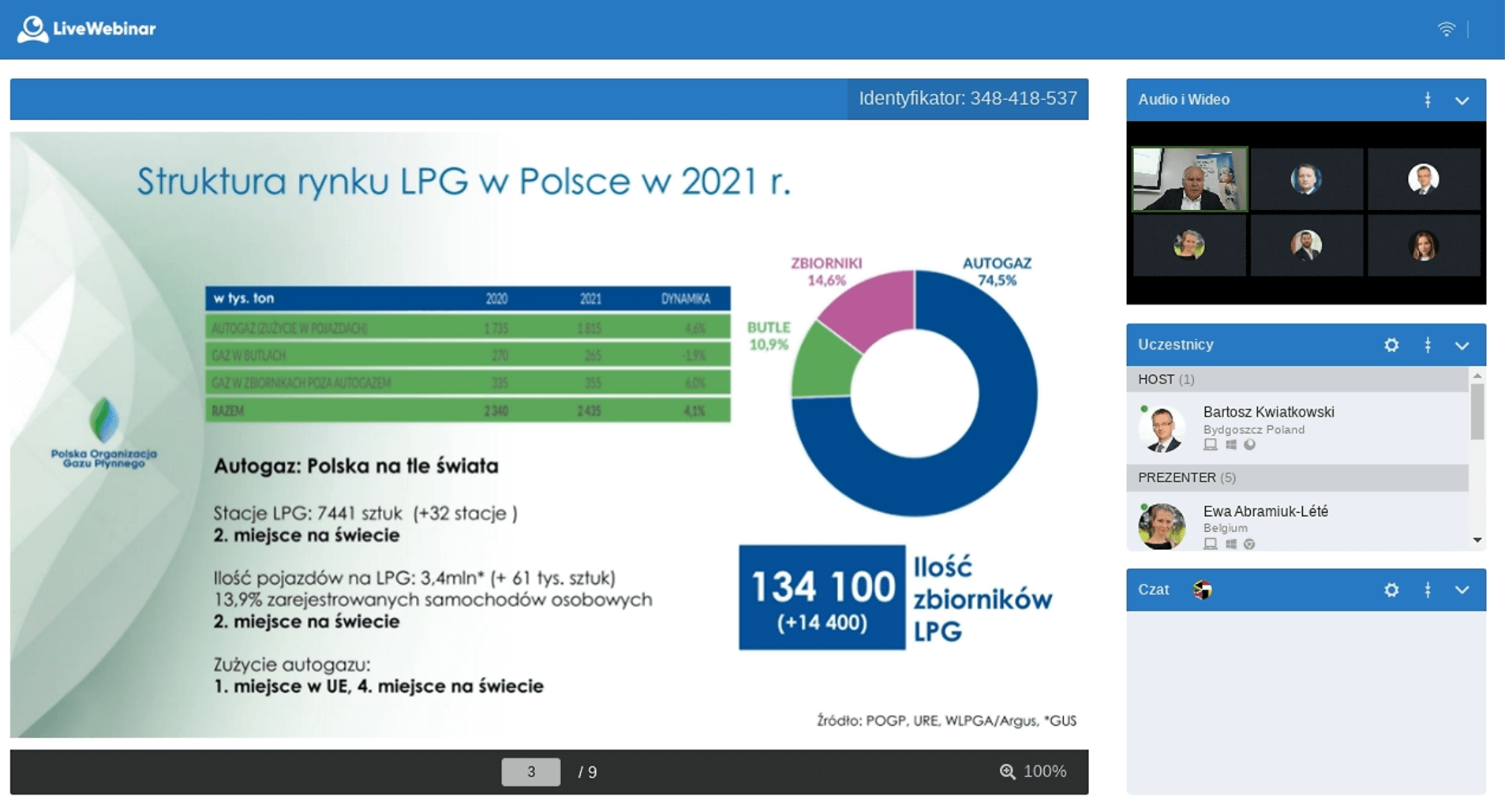
In his opening address, Sylwester Śmigiel, President of the Polish Liquefied Gas Organization, presented a picture of the liquefied gas market after the period of the COVID-19 epidemic. In 2021 consumption in Poland grew by 4.1%. The dominant market segment is autogas (74.5% of consumption), while the bulk segment is growing fast – the number of tank installations rose in 2021 to more than 134,000 units, up 12% year on year.
Poland is a genuine European powerhouse in the use of LPG in transport – it has the largest number of autogas-powered cars in the European Union, served by the largest number of stations. We are also the 4th largest market in the world in terms of autogas consumption.
79.5% of domestic LPG consumption comes from imports, and the most important sources of supply in 2021 were Russia (58.2%, 7 pp less than in 2020) and Sweden (20.3%, 4.5% more than in 2020). More details can be found in the POGP Annual Report for 2021 and in the attached presentation.
In the next presentation, Marek Popiołek, Deputy Director of the Department of Electromobility and the Hydrogen Economy at the Ministry of Climate and Environment, presented the concept of Clean Transport Zones adopted in the recent amendment of the act on electromobility and renewable fuels. Director Popiołek also explained the intentions behind leaving decisions on the restrictions applying in local Zones to local government.
Lesław Żarski, Director of the Liquid Fuels Market Department at the Energy Regulatory Office (URE), in turn presented the conclusions arising from URE's licensing and inspection activity on the LPG market. The number of licenses for trading in liquid fuels has been falling slightly in recent years, while the role of LPG as the third energy carrier at filling stations is becoming established, with a declining number of outlets offering autogas sales only. Director Żarski closed with a brief discussion of the most common procedural shortcomings observed by URE at stations selling autogas and gas in cylinders and at gas bottling plants – usually concerning small operators.
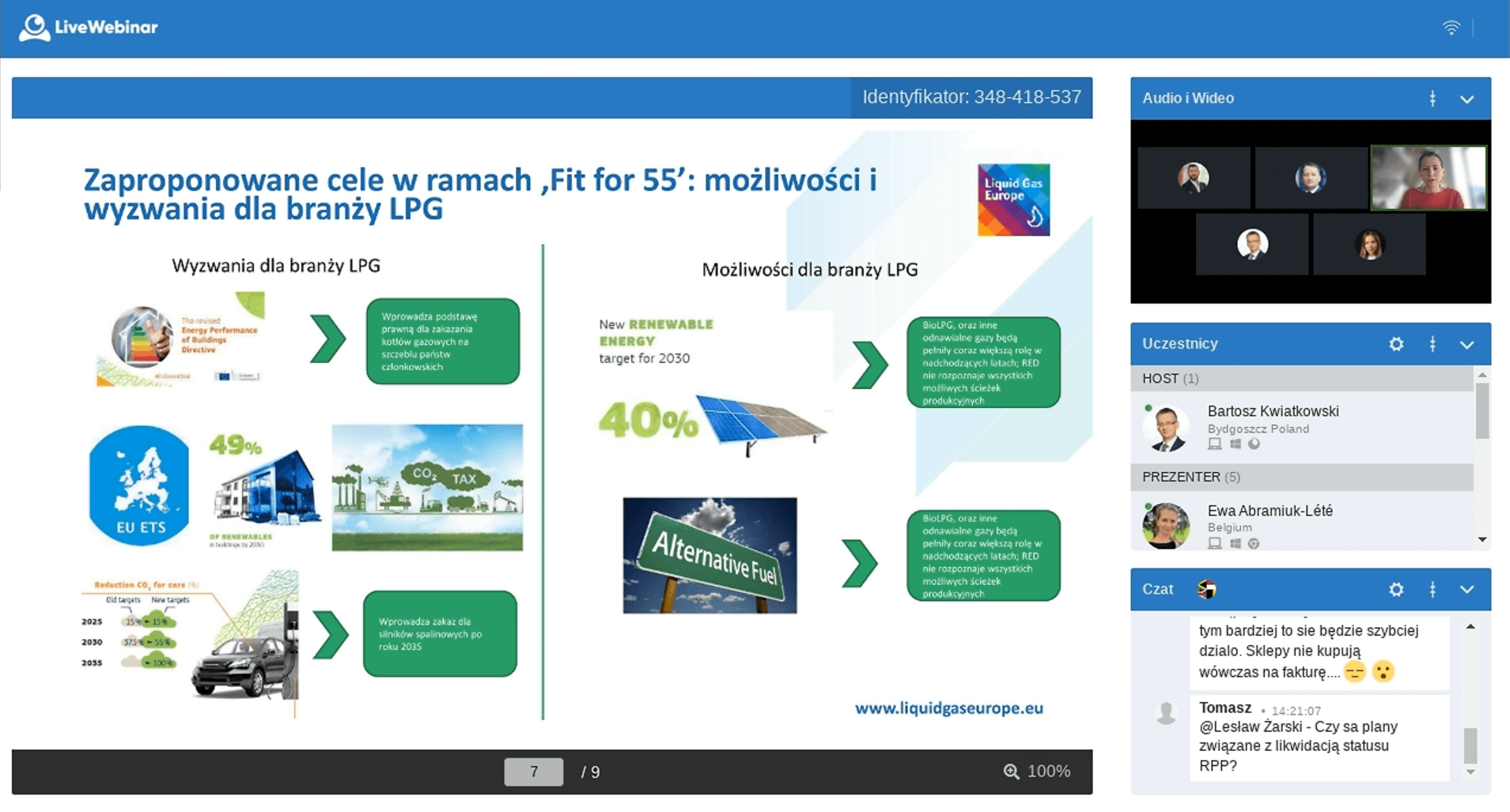
Ewa Abramiuk-Lété, General Manager of Liquid Gas Europe, presented the impact of the European Fit for 55 package on the LPG market, an issue discussed at greater length in the latest Annual Report. She assessed that by 2024 the legislative work introducing new solutions in the transport and buildings sectors into the body of Community law will be completed – some of it will apply directly to all Member States, and some will require transposition into national law before entering into force. Director Abramiuk-Lété also briefly discussed the European Commission's latest steps toward reducing the EU's dependence on Russian hydrocarbons.
Next, Luca Vailati, Market Development Director at Dimeta, presented the work being undertaken on the commercialization of dimethyl ether (DME), a fully renewable blending component or substitute fuel for LPG. In the coming months a demonstration plant producing DME through gasification for the needs of the fuel market will start operating, and in 2024 – the first in a series of commercial plants producing the fuel from municipal waste. Dimeta is looking for partners to develop the dimethyl ether market.
The discussion was closed by a presentation from Magdalena Maj, Head of the Energy and Climate Team at the Polish Economic Institute, devoted to the conclusions of the PIE report entitled Unia Europejska niezależna od Rosji? Alternatywne źródła dostaw surowców energetycznych (The European Union Independent of Russia? Alternative Sources of Energy Commodity Supply). Ms. Maj stressed that both Poland and the European Union are able to replace LPG from Russia with other sources – including from the USA and the Middle East, but also from Kazakhstan. The cost of such a change in sources of supply requires further analysis, however, and with a new structure of supply sources an increase in the price of LPG should be expected.
Finally, the President of POGP declared that the Organization's members are currently working on diversifying their sources of supply. Sylwester Śmigiel assessed at the same time that, in his view, from a technical point of view there are ways of covering the demand of the Polish market from sources other than the east, although this requires certain preparations. Gaspol, a POGP member, took an individual decision after Russia's aggression against Ukraine to stop purchasing LPG produced in Russia, but the Organization cannot interfere in the business strategies of other market participants. The industry will adapt to the decisions of the government, which has declared that it will seek to end imports of Russian hydrocarbons.