The Energy Transition of Rural Europe
29 September 2022
Poland and Europe are facing a difficult winter season. Security of supply has once again found itself at the center of European energy policy. The Russian invasion has changed the face of the energy transition: alongside the drive toward zero emissions, energy efficiency and the availability of fuels are gaining in importance. This was particularly clear during the annual State of the European Union Address, delivered on 14 September by Ursula von der Leyen. But what does Brussels have to say in practice about households in sparsely urbanized areas?


With the security of fuel supply from Russia under threat, energy consumption in buildings has become one of Europe's priorities. Not without reason, because the building sector – across its entire life cycle – accounts for around 40% of total energy consumption in Europe. Across the European Union as a whole, natural gas, whose supplies were thrown into question after 24 February, accounts for more than 40% of energy consumption in the household segment. It is hardly surprising, then, that the European Union is seeking to reduce demand for a commodity whose supply to the European market has historically been controlled by Moscow.
What may be surprising, on the other hand, is the determination of the European administration to select energy technologies arbitrarily, on the basis of discretionary decisions. We encountered this type of approach during the work on the amendment of Regulation (EU) 2019/631, that is the regulation on CO2 emission standards for passenger cars, when the European Union decided to allow only electrically powered cars to be sold within the territory of the Community after 2035.
A similar situation is now taking place in the case of buildings. Just as the European Union decided to make the sale of new vehicles with internal combustion engines de facto impossible, so now – in the work on the amendment of the directive on the energy performance of buildings (EPBD) – it is considering the possibility of limiting the use of hydrocarbon combustion technologies for heating purposes. The consequence would be a deepening of income inequality between residents of rural and urban areas. According to the analysis entitled Not Fit for 55: Prioritizing Human Well-Being in Residential Energy Consumption in the European Union the measures taken by the European Union in their present shape are holding back the convergence of living standards of households in the old and the new countries of the Union.
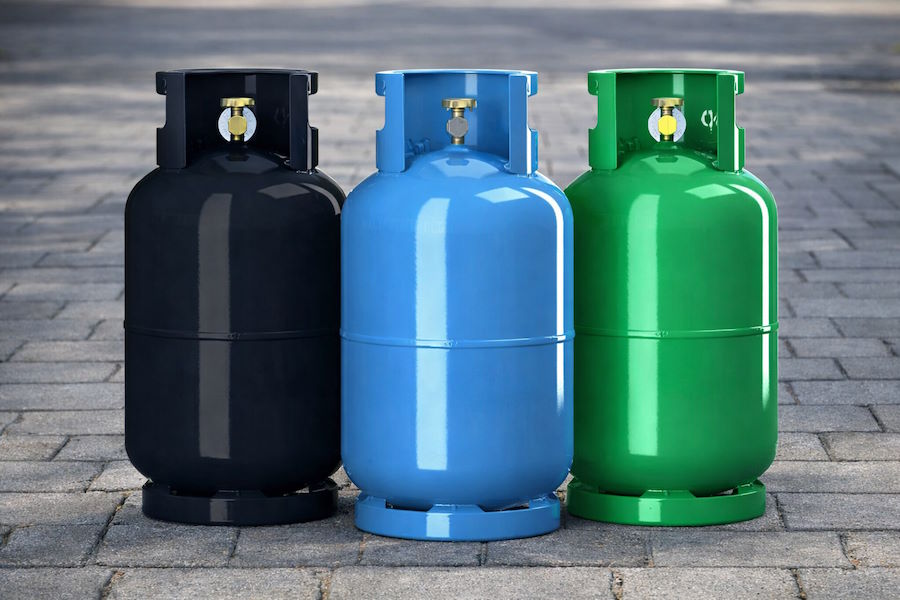
What is more, this would once again mean confusing the goal with the tool for achieving it, and giving up a technology that can deliver the most economically efficient results in the field of emission reduction. In the case of renewable liquefied gas, the amount of carbon dioxide emitted falls by around 94%, which makes it an ideal transition fuel for sparsely urbanized areas.
Almost 140 million people live in sparsely urbanized areas in the Union. They often live in older houses, built before energy efficiency standards came into force. These are usually poorly insulated buildings using high-temperature systems, and many of them have no access to gas or district heating networks. For these buildings, the electrification of heating and cooling may not be a financially realistic project. Gas boilers remain the most convenient and cost-effective solution for many of these homes, allowing air quality to be improved at the same time. We need them as a complement to the new mix of heating technologies, alongside heat pumps, and we need them as an element of local hybrid systems – energy communities and energy clusters.
If the European Union's goal is the decarbonization of the economy, the aim of the instruments adopted should be a move away from fossil fuels toward renewable ones, and not a ban on the use of hydrocarbon combustion technologies for heating purposes.
More on this subject on the website of the #RuralFutures campaign, and as soon as 18 October, during the Liquid Gas Europe webinar entitled Enabling rural areas' energy transition, the energy transition in rural areas will be discussed by:
- Anne-Katherina Weidenbach – member of the cabinet of the European Union Commissioner for Energy
- Franc Bogovic (EPP, SI) – Member of the European Parliament
- Hanna Zdanowska – Mayor of Łódź
- Seamus Boland – CEO of Irish Rural Link
- Ewa Abramiuk-Lété - General Manager of Liquid Gas Europe
Registration for the event on the website: http://ruralfutures.eu/events/webinar-rural-futures-enabling-rural-areas-energy-transition/