Webinar “How to heat a home?” - summary
17 June 2022
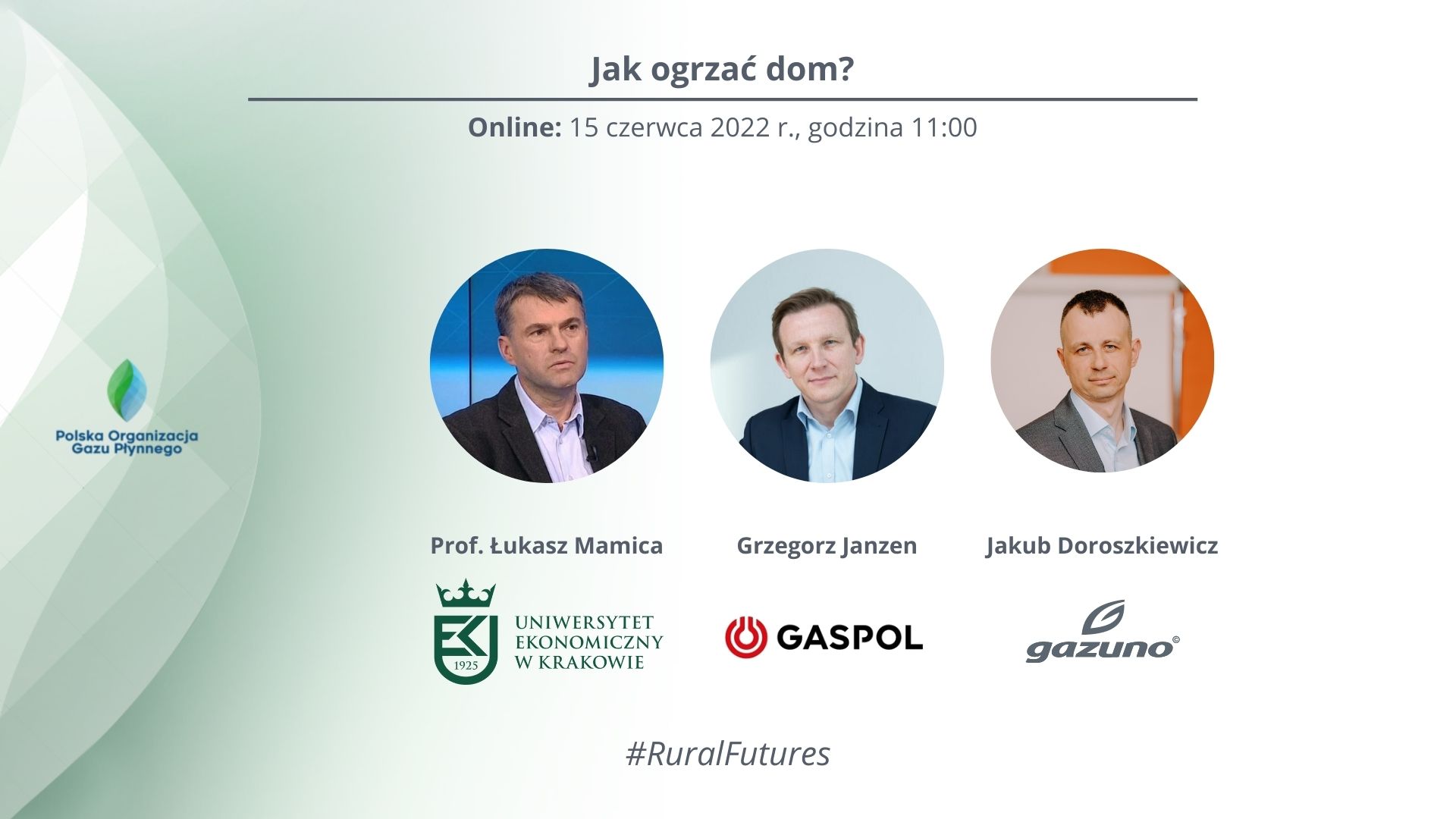
On 15 June the Polish Liquefied Gas Organization, in cooperation with the Kraków University of Economics (UEK), held a webinar titled Jak ogrzać dom? (How to heat a home?), at which the findings of a new UEK report, Koszty ogrzewania domów jednorodzinnych według źródeł ciepła - ekonomiczne i środowiskowe korzyści termomodernizacji (Heating costs of single-family houses by heat source - the economic and environmental benefits of thermal retrofitting), were presented. The event featured Professor Łukasz Mamica of UEK, head of the research team, Grzegorz Janzen, Sales and Marketing Director at Gaspol SA, and Jakub Doroszkiewicz, Technical Director at Gazuno.

The report was prepared in response to the need to estimate the cost of solving a key civilizational challenge for Poland, namely the elimination of so-called low-stack emissions, generated mainly by the use for heating purposes of installations that do not meet current emission standards, above all old solid-fuel boilers. Poland currently has some 2 million single-family houses in cities – usually with access to grid energy – and some 3.7 million houses in rural areas. About 1.5 million households use older coal-fired stoves, and probably half of them are the main source of smog in Poland.
Professor Łukasz Mamica of the Kraków University of Economics said: “The most important instrument for improving air quality in Poland would be the thermal retrofitting of single-family houses combined with the replacement of heat sources with low-emission ones, such as gas boilers or heat pumps. Replacing the heat source will have a greater impact on improving air quality, while in the case of thermal retrofitting the environmental effects depend on how deep it is.”
Based on data from January 2022 (before the invasion of Ukraine), the lowest heating costs for an average single-family house with a floor area of 100 m2 were provided by firewood, district heating, an air-source heat pump and coal. A second group of technologies comprised liquefied gas (LPG), pellets and natural gas, while electric heating generated costs almost twice as high. It is worth noting here that the changes in commodity prices observed since Russia’s invasion of Ukraine have significantly affected heating costs, above all with coal and natural gas, owing to the reduced supply from the east.
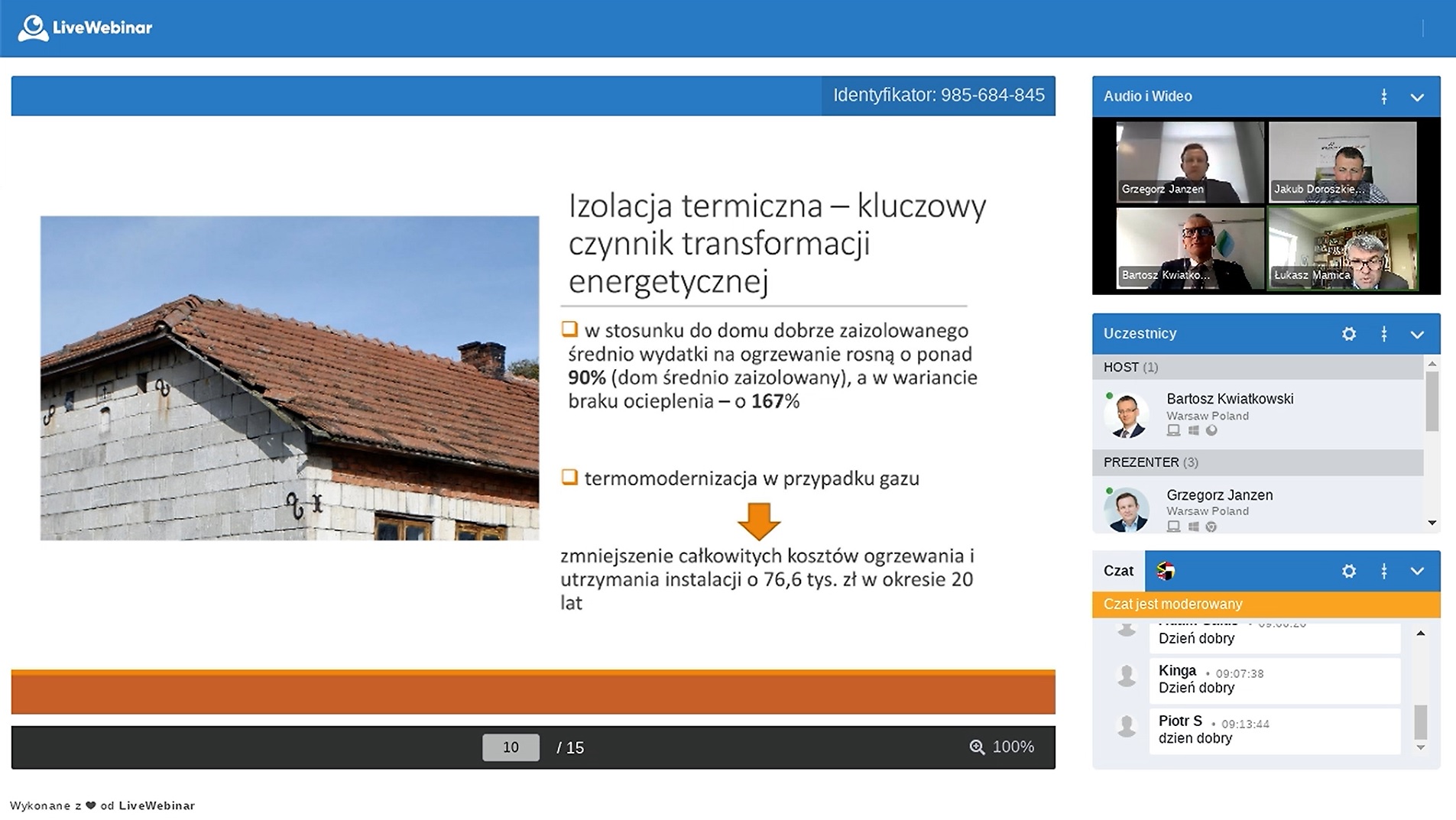
In his presentation Professor Mamica stressed that heating expenditure rises by more than 90% in the case of moderately insulated houses and by about 167% where there is no insulation at all. Seen in these terms, it is the most economically effective way of reducing heating costs. The cost of thermally retrofitting a standard building is about PLN 73,000, which usually exceeds residents’ financial means. Without financial support, the payback period for partial thermal retrofitting reaches 4-12 years, depending on the heat source used.
For the purposes of the report, a survey was carried out on a representative group of Poles. It showed that 80% of respondents attach high or very high importance to caring for the environment, and that a significant majority take a range of measures to save energy.
21% of respondents say they cannot afford new energy-saving technologies, two-thirds are discouraged or very discouraged by the costs, and 60% by the insufficient level of subsidy. Funding covering around half the cost of modernizing a building would be enough to actually eliminate the problem of low-stack emissions in Poland.
Replacing old coal-fired boilers with gas heating or heat pumps would lead in practice to the elimination of low-stack emissions (particulates and benzopyrene). It would also mean a reduction in CO2 emissions in the buildings sector – by about 61-65% in the case of gas heating and by more than 50% in the case of compressor heat pumps. These figures include the indirect emissions that arise from the generation of electricity under the conditions of the Polish energy mix.
The full version of the report can be found at https://rev4.uek.krakow.pl/.
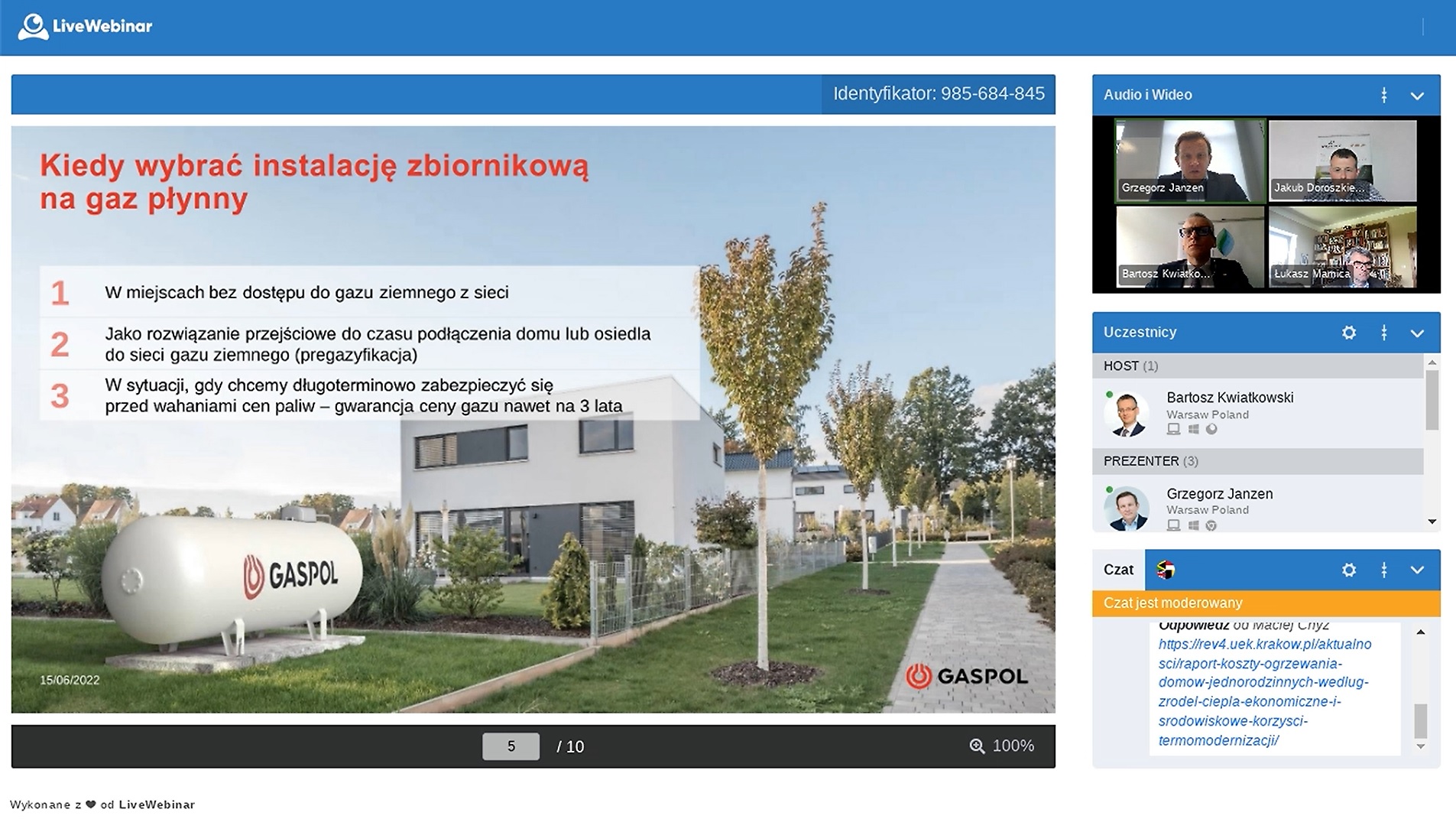
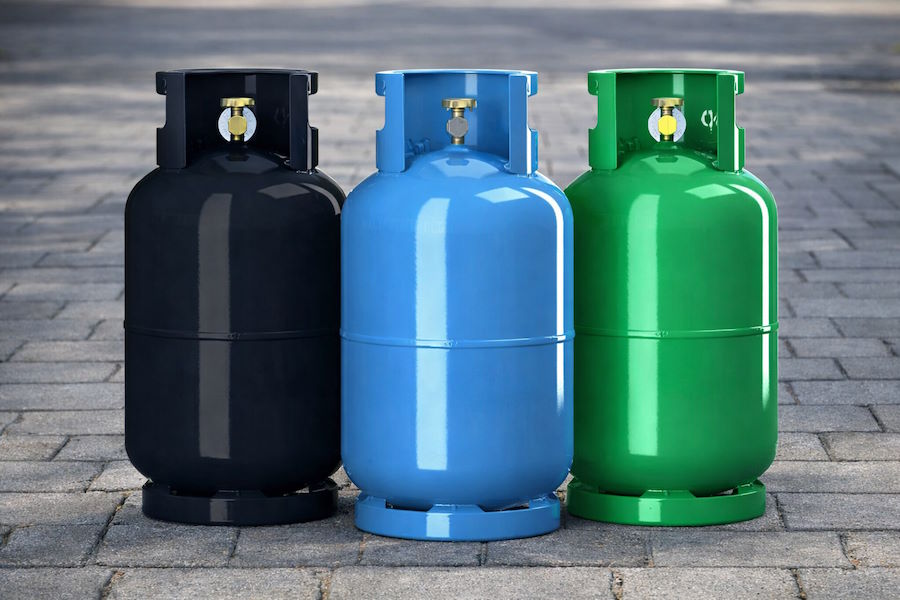
Grzegorz Janzen of Gaspol SA added that users in rural areas, living in households without access to the gas and district heating networks, have far more limited options when choosing a heat source. “Liquefied gas (including bioLPG) is a valuable complement to the energy mix in rural and hard-to-reach areas.” – he said. – “It can be used as a bridging solution serving to pre-gasify communities, that is, for the period until a house or a housing estate is connected to the natural gas network. For many of those 1.5 million coal-heated households in rural areas it is the only alternative to solid fuels that is genuinely available in the medium term.”
Liquefied gas (LPG) is delivered to Poland by sea and by rail and road tankers. Since Russia’s invasion of Ukraine, the members of the Polish Liquefied Gas Organization (POGP) have been gradually changing their sources of supply to the Polish market; Gaspol has already ceased supplies from Russia and has replaced them in full with gas imported primarily from Sweden. “The ease of transporting LPG guarantees energy security and, as a result, certainty of supply for end users in any geopolitical situation,” added Grzegorz Janzen.
Gaspol SA also offers its customers a package that responds to the demands of the new European regulations, consisting of a liquefied gas tank together with a photovoltaic module. In future it also intends to introduce to the Polish market a hybrid system consisting of a bioLPG tank and an air-source heat pump.
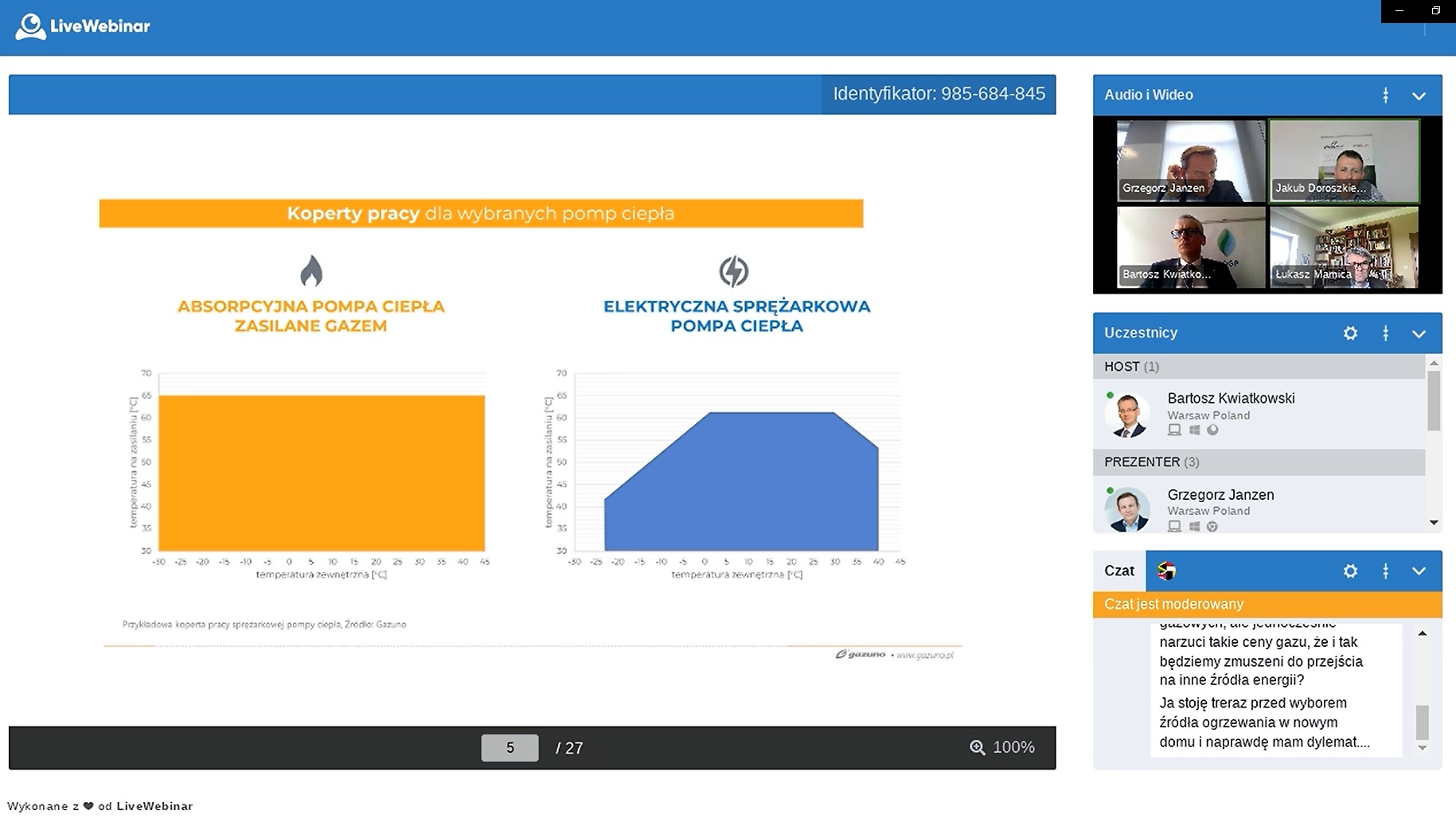
Jakub Doroszkiewicz, representing Gazuno, a supplier of absorption heat pumps, also discussed the advantages of these gas-fired devices, particularly for public buildings. Absorption heat pumps do not use compressors or electricity. They obtain renewable energy with the use of gas, which limits fuel consumption and lowers operating costs. Absorption units maintain stable operating parameters across a temperature range from -30 to 45oC. “Absorption heat pumps produce energy from air, ground or water using gas as the driving fuel.” – said Jakub Doroszkiewicz.- “Where a renewable fuel is used, that is biomethane, biopropane or green hydrogen, we can obtain as much as 100% renewable energy”. Gazuno has already supplied more than 1,500 units for a variety of facilities, including industrial plants, local government bodies, parishes and many other similar sites.
In the audience question session, concerns were raised about the significance of the proposed European regulations for the availability of heat sources using liquefied gas for the heating of residential buildings. They were answered by Bartosz Kwiatkowski, Director of POGP:
- The European Commission has presented draft amendments to the directive on the energy performance of buildings (December 2021) and to the regulation implementing the RePower EU plan (May 2022) – these are currently the subject of work in the European Parliament and, subsequently, probably by the end of this year, must be approved by the Member States of the European Union. Only then will we know the final wording of the provisions.
- It should be expected that between 2025 and 2027 financial support for the modernization of heat sources using fossil fuels, including gas, will be suspended. Therefore, if the replacement of a coal boiler with a gas one is under consideration, it is better to carry out the potential modernization earlier. After that date, the funds will be redirected towards support for heat pump technologies, including absorption heat pumps using renewable fuels.
- The European Union has no power to ban any heating technology. The proposed provisions do, however, assume that from 2027 newly built public buildings, and from 2030 all new buildings, must be zero-emission. Heat sources installed in zero-emission buildings will have to use renewable energy only, which means that the use of fuels of fossil origin will not be permitted – but bioLPG, for example, will be.
- Heat sources installed before the proposed provisions enter into force will be able to remain in operation, and fuel to run them will be available on the market. To an increasing extent this will be renewable fuel, including fuel derived from the processing of organic waste.
In 2021 representatives of the liquefied gas sector associated in the Polish Liquefied Gas Organization undertook that ultimately the entire demand of the Polish market for liquefied gas would be met with renewable fuels, including biopropane with physicochemical properties identical to the fuels used today. Renewable LPG, meeting the criteria of the directive on the promotion of energy from renewable sources, will remain a transitional fuel of the Polish energy transition – particularly in the buildings sector and among small and medium-sized enterprises in rural areas – long after 2030.