Webinar “What about those boilers?” - summary
3 March 2023
On 28 February the third webinar of the Polish Liquefied Gas Organization was held, entitled “What about those boilers? Gas heating today and tomorrow.” It brought together Daniel Markiewicz - Deputy Director of the Individual Beneficiary Department at NFOŚiGW (the National Fund for Environmental Protection and Water Management), Ewa Abramiuk-Lété - Managing Director of Liquid Gas Europe, and Janusz Starościk - President of Stowarzyszenie Producentów i Importerów Urządzeń Grzewczych (the Association of Heating Appliance Manufacturers and Importers).


The webinar was organized against the backdrop of ongoing work at the European level on the revision of the Energy Performance of Buildings Directive and in light of numerous alarmist media reports predicting an administrative ban on the use of combustion technology as a source of heat in Europe.
The webinar was hosted for the third time by Bartosz Kwiatkowski, Director General of the Polish Liquefied Gas Organization.
The recast EPBD Directive is intended to create incentives for the decarbonization of buildings, which make a significant contribution to European greenhouse gas emissions - according to European Commission data, buildings account for 40% of total energy consumption and 36% of greenhouse gas emissions. Since heating and cooling absorb 80% of the energy consumed by buildings, this is precisely the area that has become the subject of particular interest for legislators.
In Poland alone there are currently around 2 million single-family houses in cities – usually with access to grid energy – and around 3.7 million houses in rural areas. About 1.5 million households use older coal-fired stoves, and probably half of them are the main source of smog in Poland. Such a situation is untenable, but a decision lies ahead of us on how to carry out the transformation of residential heating. One of the key instruments for implementing policy in this area is the Clean Air program, whose rules were modified as of the beginning of 2023.
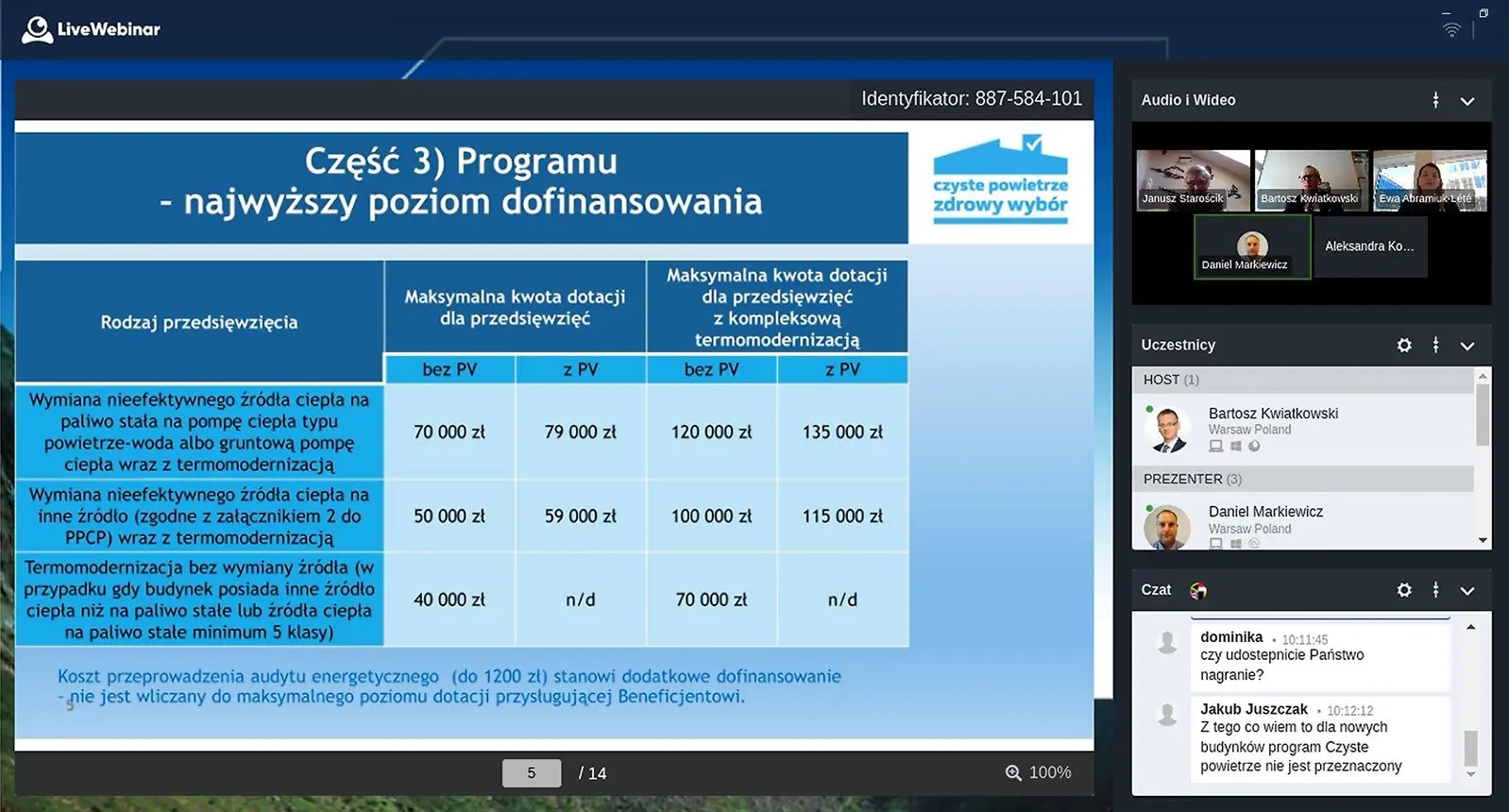
The grant amounts have been raised significantly compared with the earlier version of the program in view of the market situation, said Daniel Markiewicz of NFOŚiGW (the National Fund for Environmental Protection and Water Management). Funding from the Clean Air program can be obtained for one of three scopes of modernization work carried out on a single-family building:
- replacement of an inefficient heat source with an air-to-water or ground-source heat pump, together with thermal modernization,
- replacement of an inefficient heat source with another heat source - including, among others, an air-to-air heat pump, a gas condensing boiler, an oil boiler, a wood-gasification boiler or a pellet boiler - together with thermal modernization,
- thermal modernization without replacing the heat source, if the building is not heated with solid fuel or is equipped with a coal boiler of at least class 5.
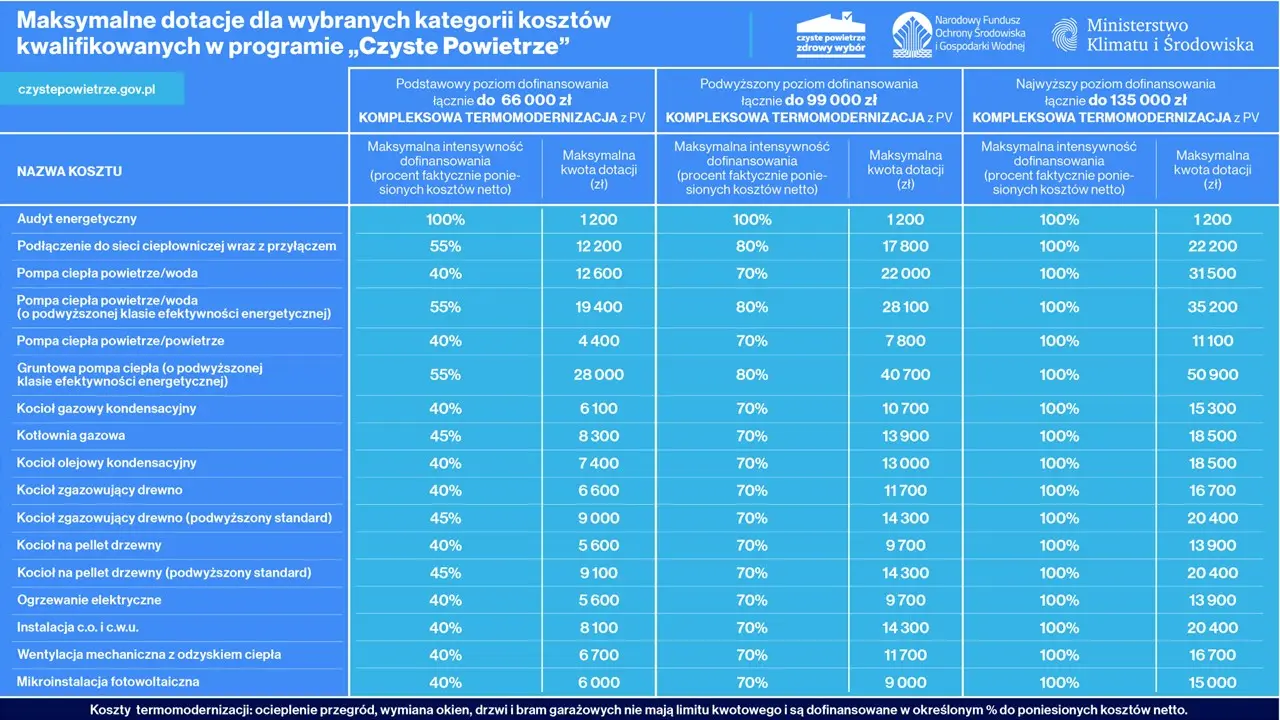
For a project to qualify for co-financing from the Clean Air program, the gas condensing boilers installed must meet, with respect to space heating, the requirements of energy efficiency class A as a minimum, on the basis of the product fiche and the energy label.
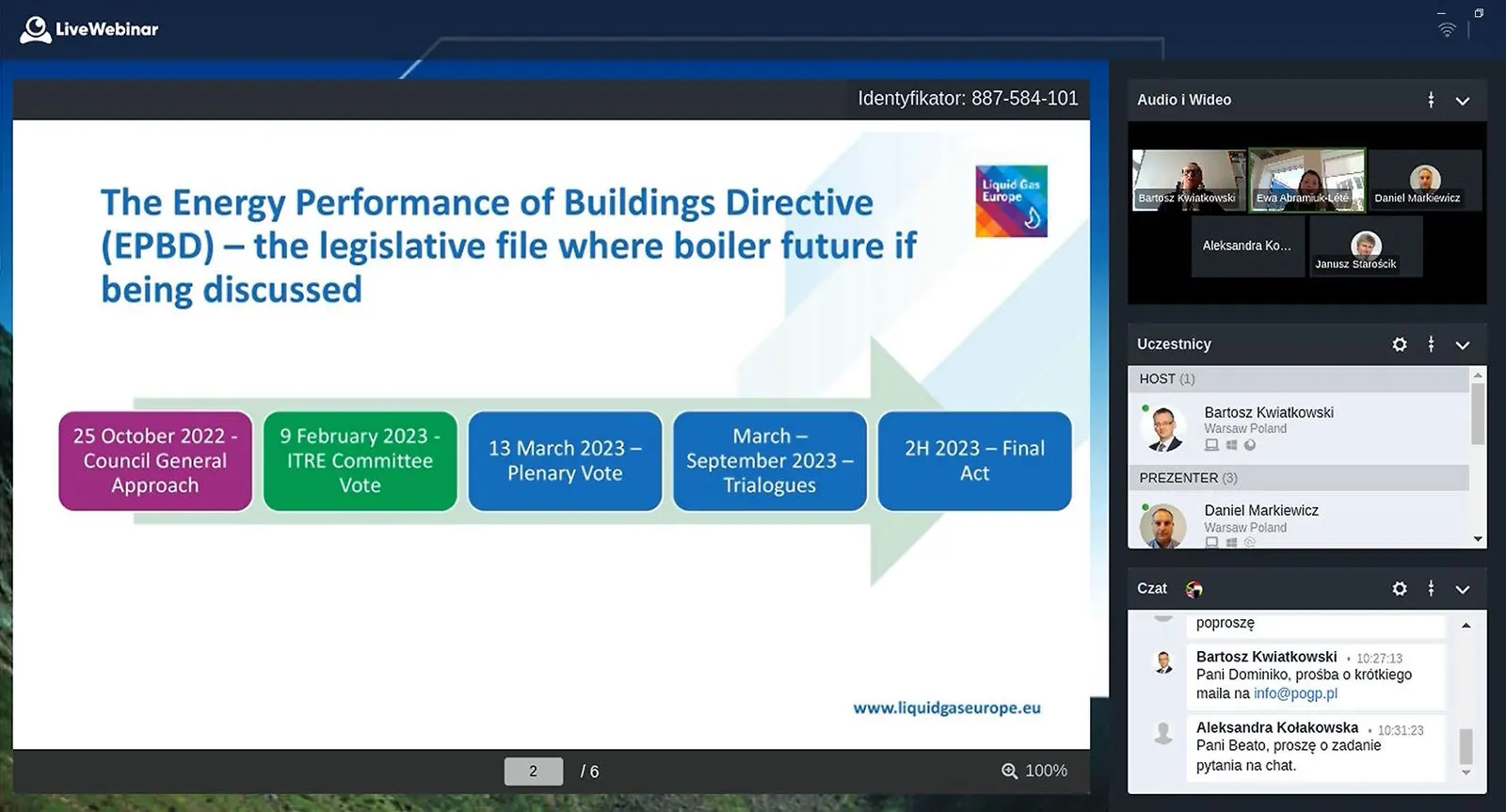
Ewa Abramiuk-Lété of Liquid Gas Europe explained that the scale of media coverage devoted to the issue of gas heating is linked to the final phase of work on the recast Energy Performance of Buildings Directive, the text of which will be voted on by the European Parliament on 13 March.
In the current shape of the draft directive we are not dealing with a ban on the use of gas boilers; there is no need to fear that they will have to be dismantled, said Ewa Abramiuk-Lété. Gas boilers will also be able to be used in the future, except that to an increasing extent the fuel will be of renewable rather than fossil origin. From 2027 all new public administration buildings, and from 2030 all new buildings, will have to be zero-emission, which means that only renewable fuels - such as biomethane or biopropane - will be able to be used in them.
Once the new directive enters into force, however, financial support for replacing heat sources with combustion technology will be discontinued - which means it will no longer be possible to use a grant for the installation of a boiler. Anyone interested in such a modernization project should therefore carry it out under the Clean Air program as soon as possible.
The Council of the European Union proposes that Member States prepare plans for the complete phase-out of fossil fuels for heating purposes by 2040, added Ewa Abramiuk-Lété. In the coming months the European Commission, the Council of the European Union and the European Parliament will negotiate the final shape of the directive, which we will learn in the second half of 2023.
That, however, is not the end of the gas boiler story. The European Commission is currently working on a review of the Ecodesign Directive, which will be converted into a regulation. While a directive has to be transposed into national law by an act of parliament, a regulation applies directly. The draft of the new ecodesign regulation, judging by the current leaks, would mean a de facto ban on placing boilers on the market after 2029 through the introduction of a minimum efficiency limit of 110% for heat sources, which is a level impossible to achieve in the case of stand-alone boilers, warned Ewa Abramiuk-Lété. We will learn the content of the draft very soon, but the Commission's rhetoric is very worrying.
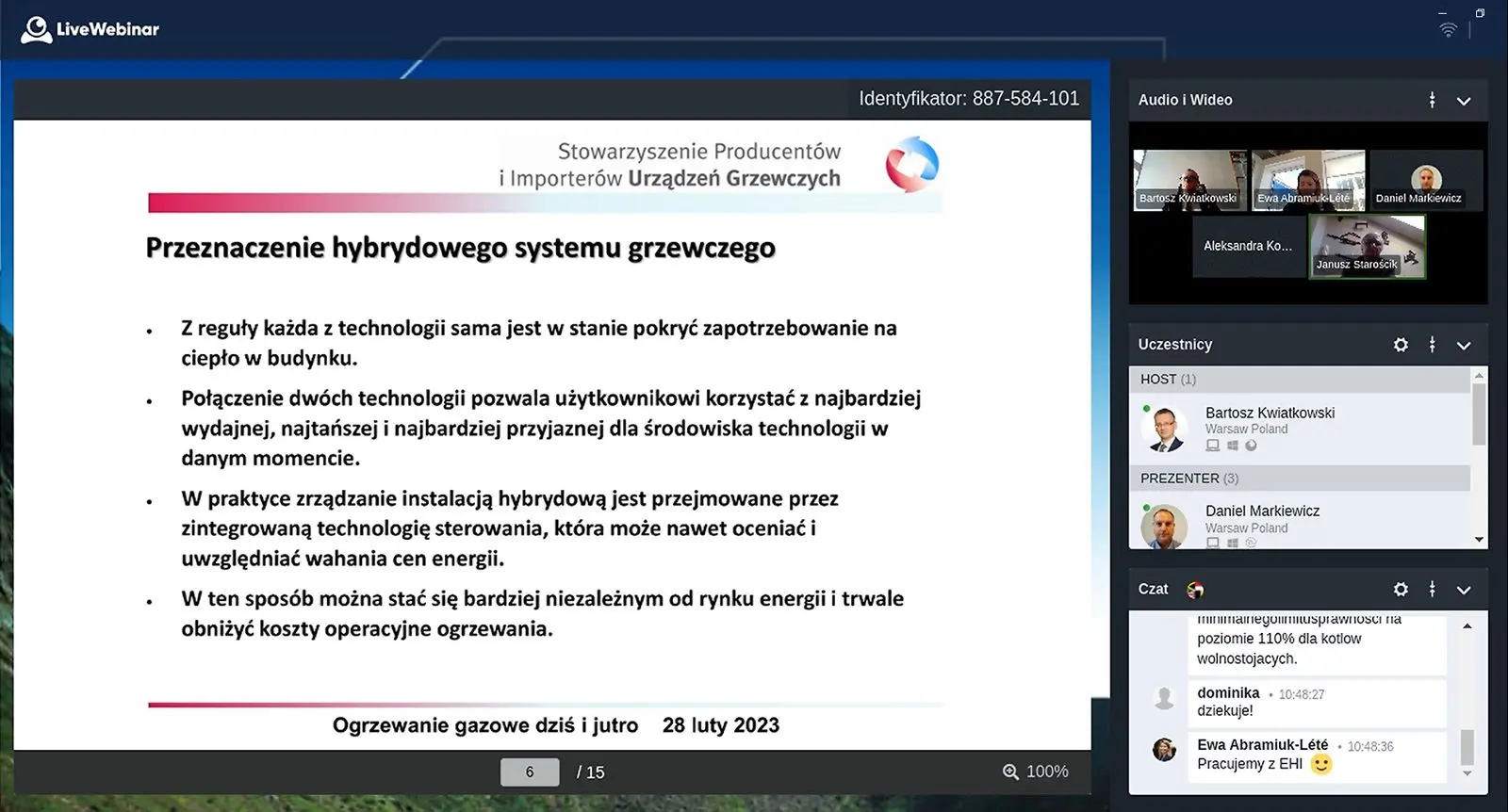
Janusz Starościk of Stowarzyszenie Producentów i Importerów Urządzeń Grzewczych (the Association of Heating Appliance Manufacturers and Importers) noted: Members of the European Parliament strengthened the Commission's proposal by creating a framework that ensures a gradual move away from fossil fuels in Europe without leaving consumers without affordable heating, which is very important. He stressed that the difficulties connected with the growth in electricity demand that accompany the large-scale electrification of the European economy are not an argument for abandoning that direction, but rather for implementing the transformation of heating rationally, using a variety of technologies - including hybrid systems. Janusz Starościk added that the complete phase-out of gas of fossil origin is planned, in line with the European Union's climate goals, by 2050.
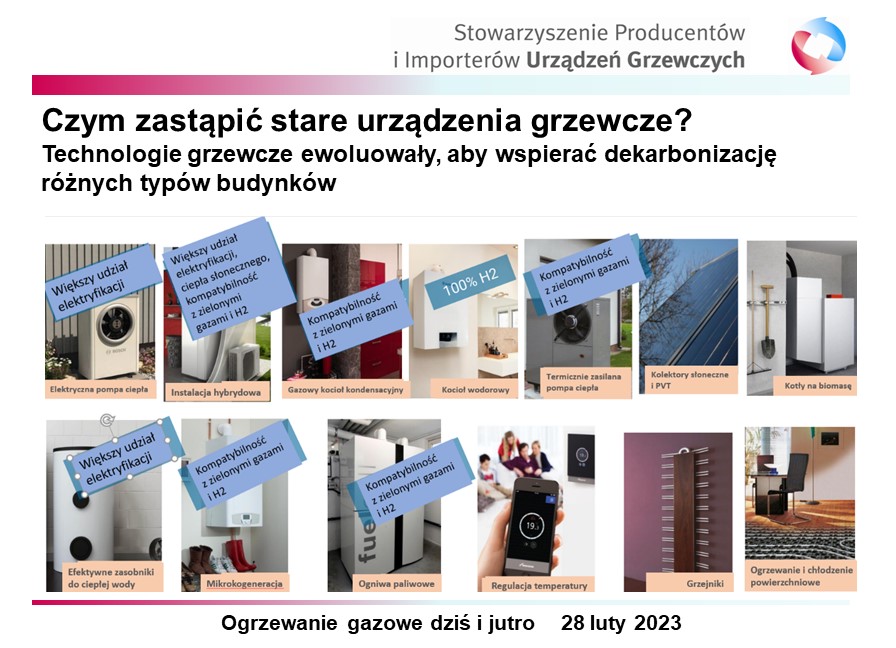
A common-sense approach to many millions of old buildings, said Janusz Starościk, covers green gases and hybrid systems. This provides security, affordability and lower energy system costs compared with mass electrification. We should let every technology develop, he stressed. Heating systems should work together, making two fundamental things possible: that the user has warmth at home in all conditions, and that this warmth is provided at reasonable cost. Securing any kind of monopoly is harmful to the consumer.
Heat pumps do not have to compete with gas heating - especially in buildings that are already in use, they can form part of hybrid heating systems. Gas condensing boilers combined with a heat pump or with solar collectors currently enjoy particularly high popularity and are often installed in residential buildings. In hybrid systems, air-to-water heat pumps are usually used in a split or monoblock configuration.
Key conclusions from the webinar:
- The content of the recast EPBD Directive - which also covers the changes introduced by RePowerEU - will finally be known in the fall of 2023. At present there are no grounds for stating that it bans the use of gas boilers; it does, however, create the conditions for EU Member States to gradually phase gas of fossil origin out of residential heating, and it allows only the use of renewable fuels or hybrid systems in new buildings after 2030.
- In the case of Poland, a country that still widely uses non-class-rated coal stoves to heat single-family buildings, it is important to keep on the market a combination of heating technologies that will provide adequate thermal comfort at the most acceptable cost possible. A realistic solution is the transformation of heating with the use of green gases (biomethane, biopropane or renewable DME) and of hybrid systems using condensing boilers and heat pumps. Setting boilers against heat pumps is a false alternative.
- The European Commission is working on a draft of a new ecodesign regulation that will replace the directive currently in force. The proposed content will be presented in the coming months, but very restrictive conditions for placing gas boilers on the market can be expected, including with regard to a minimum efficiency that cannot be achieved in any way other than operation in a hybrid configuration.
We also recommend the summary of our earlier webinar entitled How to heat a home?