Statement of the Polish Liquefied Gas Organization on the Proposed Ban on Sales of Internal Combustion Passenger Cars
13 May 2022
On 11 May 2022 the Committee on the Environment, Public Health and Food Safety (ENVI) of the European Parliament backed, by 46 votes to 40, a draft regulation that amounts to a de facto ban on sales of internal combustion passenger cars.

On 11 May 2022 the ENVI Committee voted on its position on amendments to Regulation 2019/631 setting CO2 emission standards for new passenger cars and for new light commercial vehicles. The proposed amendments assume that from 2035 new passenger cars sold on the European market will not be allowed to emit carbon dioxide. Emissions would be measured at the exhaust system level (Tank-to-Wheel) and not under the fuel life-cycle methodology (Well-to-Wheel) advocated by our industry. In practice this means that, if these provisions enter into force, after that date only new vehicles with electric drivetrains or powered by hydrogen fuel cells will be able to be sold on the European market.
The circles that promote electromobility as the sole solution for European road transport received the vote in the Environment Committee with satisfaction, because a ban on the sale of new internal combustion cars in Europe will force manufacturers to accelerate work on the electrification of every model they offer. We wish, however, to draw attention to the key risks associated with the full electrification of road transport:
- Over the coming decade, accelerated development of the electricity distribution grid is required in order to make it possible to install charging stations for new electric cars. Charging electric cars currently remains an infrastructure bottleneck in almost all of Europe.
- A key component of electric cars is chemical batteries, built using raw materials that are supplied to the market largely by undemocratic countries – such as lithium, cobalt or manganese. Confining ourselves to a single drivetrain technology means that Europe will replace its dependence on hydrocarbons with dependence on rare earth metals.
- Regulatory intervention aimed at arbitrarily selecting a drivetrain technology for the entire vehicle fleet in Europe, under conditions of limited supply of raw materials, threatens a significant increase in the cost of new vehicles and a widening of the group of people excluded from transport, that is, unable to afford to buy a car. An administratively driven increase in demand for raw materials will neutralize the expected fall in the unit production costs of car batteries.
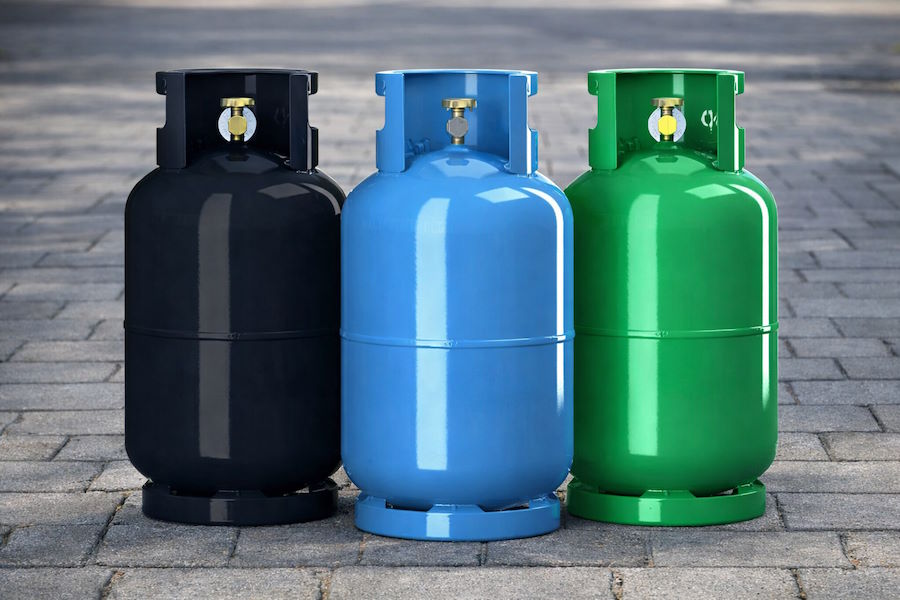
The liquefied gas industry in Europe has committed itself to moving away entirely from fossil sources and to providing customers with clean renewable fuels. Since 2018 bioLPG produced from renewable feedstocks has been available on the European market in growing volumes. Steps have also been taken to begin the production and commercialization in Europe of synthetic dimethyl ether, which could serve as a cost-effective renewable fuel for the decarbonization of transport. We assess the rules recommended by the ENVI Committee as limiting the availability of vehicles to consumers, but also as ineffective from the point of view of the emission reduction target – unless by 2035 the Member States, including Poland, manage to move away from the use of fossil fuels for the generation of electricity.
POGP appeals for the retention of the possibility of selling on the European market a pool of cars powered by internal combustion engines, provided that they use sustainable synthetic fuels compliant with the provisions of the directive on the promotion of energy from renewable sources (RED). Preserving limited technology neutrality would make it possible to reduce the risks indicated above that are associated with the mandatory use of electric drivetrains.