The Role of Liquefied Gas in Rural Areas
11 October 2022
Liquid Gas Europe and the European Biogas Association have published a joint analysis devoted to the strategic importance of liquefied gas in sparsely urbanized areas.

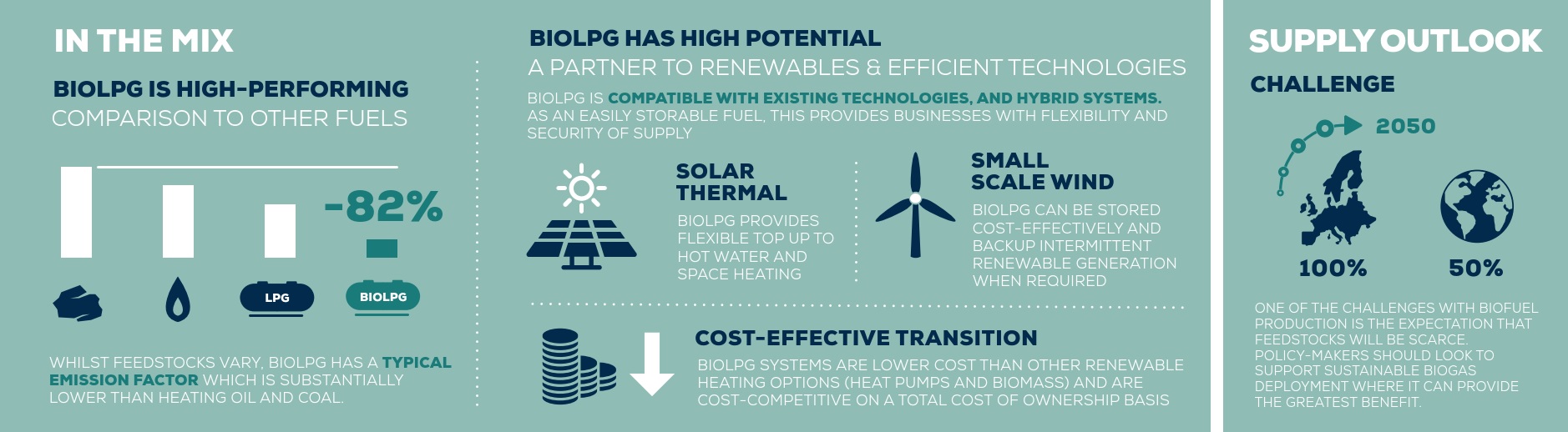
Decarbonization of households in sparsely urbanized areas of Europe is one of the hardest challenges of the energy transition. Rural areas are home to nearly 50 million households in the European Union. Most of them have no gas or district heating connection. 36% of the buildings date from the period before thermal insulation standards were introduced. These are as a rule older buildings, with poorer energy performance, using high-emission fossil fuels for heating - in Poland above all coal (7% of buildings across Europe), in Western Europe often heating oil (23%).
For this group of older, less well insulated buildings, often occupied by lower-income people and relying on high-temperature heating systems, boilers running on liquefied gas remain the optimal solution. The growth in the coming years of production of renewable gases, physicochemically identical to those in use today, at the same time offers a simple fuel substitution that brings very significant environmental benefits - an almost complete elimination of particulate emissions and substantial reductions in carbon dioxide emissions. More details in the attached report by Liquid Gas Europe and the European Biogas Association.
We also invite you to register for the seminar on the future of liquefied gas as a heating fuel in Europe.